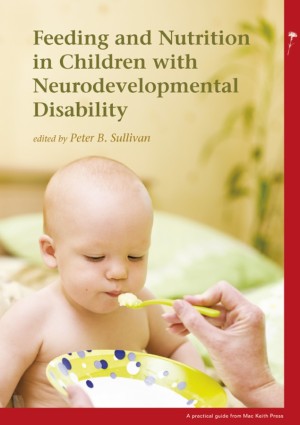
Feeding and Nutrition in Children with Neurodevelopmental Disability

This book is written to assist those who have responsibility for the nutritional and gastrointestinal care of children with neurodisability.

The emphasis throughout is on the importance of multidisciplinary care. It is concerned with the problems surrounding the nutritional management of children with neurological impairment who have difficulty swallowing and feeding.

Written from a multidisciplinary perspective by a group of authors with considerable clinical and research experience in this area, it covers: the epidemiology of feeding disorders in children with cerebral palsy; nutritional assessment;  evaluation of oral-motor function; dietetic management; nursing issues in the nutritional care of the disabled child; tube feeding; gastrointestinal problems and their investigation.

Fits and Faints

This book is concerned with one of the major areas of misdiagnosis in medicine today. It has been estimated that as many as thirty per cent of children typed as ‘epileptic’ when presenting with loss of consciousness, falls or other paroxysmal episodes have, in fact, non-epileptic attacks. The most common of these conditions, the vagalmediated anoxic seizure or fainting fit, is so frequent that it will be encountered by anyone involved in the practice of clinical medicine in its widest sense. These seizures are discussed in depth using original data and extensively reviewing the literature. Many other less common, but nonetheless important, varieties of fits, faints and ‘funny turns’ are self-induced by a Valsalva maneuver, and motor events ranging from day-dreaming to the effects of suffocation and brain swelling.

Clinics in Developmental Medicine N0. 109

Fragile X Syndrome and Premutation Disorders

Fragile X syndrome results from a gene mutation on the X-chromosome, which leads to various intellectual and developmental disabilities. Fragile X Syndrome and Premutation Disorders offers clinicians and families a multidisciplinary approach in order to provide the best possible care for patients with Fragile X. Unique features of the book include what to do when an infant or toddler is first diagnosed, the impact on the family and an international perspective on how different cultures perceive the syndrome.

  • Presents up-to-date diagnostic and treatment approaches for Fragile X syndrome and other premutation disorders, including FXTAS, FXPOI and FXAND
  • Summary of new beneficial treatments from a molecular/neurobiological standpoint
  • Practical clinical strategies for managing both behavioural and medical aspects of the syndrome
  • Explores the unique effects of the disorder on women

Readership

This book will be of interest  to Paediatricians, Paediatric Neurologists, Allied Health Professionals and families.

From the Foreword

“This book is an essential addition to the existing literature, offering a wealth of information on all clinical and molecular aspects of the Fragile X syndrome mutation in one place.”

Professor Frank Kooy, University of Antwerp, Edegem, Belgium

Clinics in Developmental Medicine

Handedness and Developmental Disorder

This book offers a comprehensive and readable account of theoretical aspects of the origins of normal development of handedness and its relationship to cerebral lateralization and intellectual function.

Later chapters review the evidence for links between non-right-handedness and various developmental disorders: mental impairment, autism, epilepsy, and disorders of spoken and written langauge.

The emphasis is on understanding the range of underlying mechanisms that might lead to associations between handedness and disorder, and on identifying assessment procedures that can distinguish between different explanations.

Clinics in Developmental Medicine No. 110

Language Development and Disorders

This book brings together theoretical, practical, and clinical knowledge from several disciplines that bear on language and communication in an accessible form.

Contributions from education, linguistics, psychology, pediatrics, psychiatry, neurology, neuropsychology, and speech therapy are included. They describe language development, suggest classifications for language pathology, outline the epidemiology of language difficulties, consider assessment and therapy, alternative communication systems and the impact of technology on communication aids.

The variety of perspectives that it provides will make it particularly useful to the range of specialists who are concerned with the development of communication skills and language disorders.

Clinics in Developmental Medicine No. 101-102

Developmental Examinations of Infant and Preschool Children

This practical guide is for primary-care doctors and health visitors involved in the detection of developmental problems in children whose parents are worried that their child is not developing like other children. It will be of assistance to paediatricians and paediatric neurologists in providing a developmental perspective in the diagnostic process in their work with children with chronic neurological disorders. The tests described have been standardized by the author and cover the essentials of developmental examination: history–including parents’ views of their child’s development; clinical tests of hearing; examination of visual behavior and visual acuity; observation of developing motor skills; language/performance profiles in which any substantial unevenness or an overall low score may reveal a developmental problem. In practice the range of average ability is wide, so a distinctive feature of this book is a standardized data base in graphical form that can be used to identify readily those children (lowest twenty percent) who warrant further specialist investigation or treatment. It is particularly relevant today when general practitioners are being directed to take an active role in such preventive work.

Clinics in Developmental Medicine No.112

Developmental Screening and the Child with Special Needs

This book is the outcome of many years’ study on the large population of preschool children in Dundee, Scotland, where, since 1973, there has been an extensive and comprehensive program of development screening. The research population numbered more than 5,000 children, and the aims of the study were to estimate the frequency and types of neurodevelopmental disabilities identified, to describe their management, to attempt to ascertain causative factors, and to look at the predictive value of screening and its therapeutic value. This book is essential reading for all concerned with the planning or implementation of screening and surveillance programs for preschool children, and should finally answer the question of whether or not screening is worth while.

Clinics in Developmental Medicine No.86

Children with Neurodevelopmental Disabilities

Children with Neurodevelopmental Disabilities

A comprehensive textbook on the practice of paediatric neurodisability, written by practitioners and experts.

Using a problem-oriented approach, the authors give best-practice guidance, and centre on the needs of the child and family, working in partnership with multi-disciplinary, multi-agency teams. Drawing on evidence-based practice to provide a ready reference for managing common problems encountered in practice. Chapters open with real life clinical case scenarios and lead onto a problem-based approach.

The book covers the practicalities of assessment, management and care of children with a wide range of disabling conditions and also provides tools and templates for practising paediatricians.

The text is illustrated with clear tables, figures, diagrams and flow charts to enable easy referencing. Each section has guidance on further reading, useful websites and other information useful for families.

Readership

Paediatricians (trainees in community and neurodisability paediatrics); consultants in community and general paediatrics; allied health professionals –  physiotherapists, occupational therapists, speech and language therapists; educational psychologists and clinical psychologists working with children; other professionals working with disabled children, young people and their families.

Communicating without Speech

This book is aimed at health professionals treating children who fail to develop adequate speech due to complex neurological conditions or learning disabilities and may require augmentative and alternative communication (AAC) systems.

By presenting current research and accepted good practice in the field of AAC, authors give detailed information on the neurology of speech and language, and offer guidelines for the assessment of non-speaking children. Issues of prognosis for speech, the timing of intervention and the importance of working within a multidisciplinary framework are discussed. The central role of families and schools in the successful introduction and support of AAC for social communication and curriculum access is recognised. A range of AAC systems and resources are described, and the views of AAC users and their families represented. This is essential reading for clinicians who treat non-speaking children, and the therapists and other professionals who support these children.

Clinics in Developmental Medicine No. 156

Comorbidities in Developmental Disorders

In the last decade the term ‚’comorbidity‚’ has gained popularity in the field of paediatric neurodisability, with the increasing recognition that many conditions are rarely present in isolation. Within this field, the term is often used to refer to the co-occurrence of conditions more frequently than would be expected by chance, which can include instances where one condition causes the other, where they share a common cause (for example, genetic), or where they are in fact manifestations of a single condition.

Whether it is valid to use the term ‚’comorbidity‚’ in all these situations, and how precisely it should be used, is something that the contributors to this book grapple with in their own fields of interest. The contributors, all world experts in their fields, also discuss what we can learn from the presence of comorbidities, however defined, about the aetiology and treatment of neurodevelopmental disabilities. In particular, they demonstrate how our increasing understanding of the mechanisms underlying the common association of many ‘comorbidities‚’ is helping us to understand the natural history of these conditions and improve our management of them.

  • This book examines the concept of ‘comorbidity’ in developmental disorders
  • World experts explain the mechanisms underlying the common association of many conditions
  • The contributors review the implications for treatment and management

Readership
Paediatricians, paediatric neurologists, child psychiatrists, neurodevelopmentalists, and physical, occupational and speech therapists working with children with developmental disabilities.

Clinics in Developmental Medicine No. 187