Ethics in Child Health: Core Modules
£0.00 / year
Core modules (4) – Setting the Stage: Attuning Moral And Ethical Thinking
We recommend that you complete these modules before moving on to the rest of the ‘Ethics in Child Health’ course.
Part of the Ethics in Child Health series of short courses | Core Modules.
The ‘Core Modules’ of Ethics in Child Health bundle includes:
Introduction:
This short introduction module will explain the background to the creation of Ethics in Child Health by Mac Keith Press.
A Parent’s Perspective on Everyday Ethics:
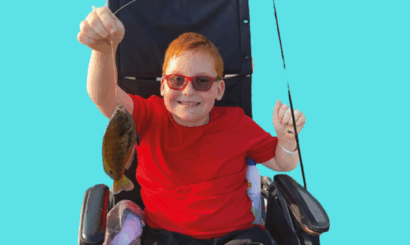
The editors were very fortunate to engage as a co-editor Jennifer Johannesen, the parent of Owen (No Ordinary Boy), who was born with profound impairments and died at age 12 years. She offers insights, as someone with training in ethics, to share her personal experiences.
Present-day Health and Neurodevelopmental Disability:
This module addresses, among other themes, current insights and beliefs about children, families, disability issues, rights, policies and the conceptual and clinical underpinnings of work in childhood neurodisability.
Can Moral Problems of Everyday Clinical Practice Ever Be Resolved?:
Co-editor Eric Racine is an ethicist with a major interest in child neurodisability. His informative, context-setting module brings together a number of themes and approaches to ethical analysis.
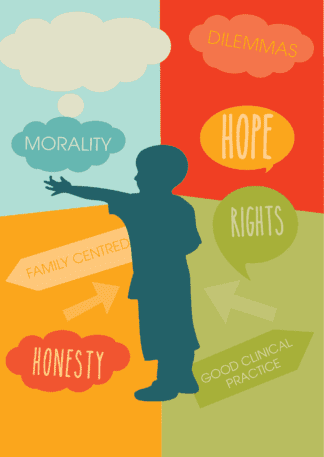
These Core Modules explore the essential principles of the Ethics in Child Health course providing insights for navigating moral dilemmas in pediatric care.
Overview:
This module will demonstrate the functionality of the e-learning environment. Each page includes the main body text, accompanying video content to expand on the main content, and quiz questions to test your comprehension and also to invite your own personal response to the material.
01 As a health professional, has this ever happened to you? (video)
02 Goals of the course (video)
03 Background (video)
04 What do we mean by the ethical dimensions of neurodevelopmental disability? (video)
05 The purposes of this course (video)
References
User Guide
Learning Account
A parent’s perspective on everyday ethics
Johannesen provides three vignettes she and her family experienced in their journey with Owen into the world of the clinician. Each story provides invaluable perspectives that reflect the good intentions of the healthcare providers and systems with which their family worked. At the same time, as she describes the actions of medical professionals, it becomes apparent that there were unrecognized implications and consequences to these encounters.
01 Prologue
02 Family background
03 Policy nudges
04 A parent’s perspective
05 Broken communication (video)
06 A parent’s perspective
07 Autonomy without guidance
08 A parent’s perspective
09 A parent’s perspective on everyday ethics
10 Epilogue (video)
References
User Guide
Learning Account
Present-day health and neurodevelopmental disability
The co-editors reflect on how the current era has been enormously influenced by developments in, for example, public health (survival of children with impairments); concepts about ‘health’ (such as the World Health Organization’s International Classification of Functioning, Health and Disability); and movements to enshrine the rights of children and the rights of people with disabilities in
international conventions.
01 Prologue (video)
02 Trends and concepts (video)
03 How do we think and talk about childhood disability? (video)
04 The role of the family and quality of life
05 The nature of services (video)
06 The ethical dimensions
07 How does a family’s journey begin?
08 The processes of assessment and communication (video)
09 Diagnosis, formulation and prognostication (video)
10 Discussing the future
11 Organization and delivery of services (video)
12 A structural challenge (video)
13 A framework for decision-making (video)
14 Ongoing management
15 When do child services stop?
16 Advocacy and health promotion (video)
References
User Guide
Learning Account
Can moral problems of everyday clinical practice ever be resolved? A proposal for integrative pragmatist approaches
We believe that this module will help learners frame their understanding of the cases that populate the course as well as their own real-life professional encounters. It explains and discusses the importance and complexity of the methods by which ethical deliberation processes are engaged.
01 Introduction (video)
02 Different theoretical perspectives
03 A proposal for an integrative approach (video)
04 Moral awareness (video)
05 Ethical deliberation, ethical imagination and the analysis of principles
06 Ethical responses (video)
07 Evaluation of ethical outcomes and resolution
08 Moral growth (video)
References
User Guide
Learning Account
Introduction:
Peter L. Rosenbaum, Professor of Paediatrics, McMaster University, Hamilton, Ontario, Canada;
Gabriel M. Ronen, Professor of Paediatrics, McMaster University, Hamilton, Ontario, Canada;
Bernard Dan, Professor of Neuroscience, Université libre de Bruxelles (ULB), Brussels; Director of Rehabilitation, Rehabilitation Hospital Inkendaal, Vlezenbeek, Belgium.
A parent’s perspective on everyday ethics:
Jennifer Johannesen, Author and Patient Advocate, Toronto, Ontario, Canada
Present-day health and neurodevelopmental disability:
Peter L. Rosenbaum, Professor of Paediatrics, McMaster University, Hamilton, Ontario, Canada;
Gabriel M. Ronen, Professor of Paediatrics, McMaster University, Hamilton, Ontario, Canada;
with contributions by Barbara J. Cunningham, PhD Candidate, School of Rehabilitation Science, McMaster University, Hamilton, Ontario, Canada
Can moral problems of everyday clinical practice ever be resolved? A proposal for integrative pragmatist approaches:
Eric Racine, Director, Neuroethics Research Unit, Institut de recherches cliniques de Montréal (IRCM); Full Research Professor, IRCM; Associate Director, Academic Affairs, IRCM; Associate Research Professor, Department of Medicine, Université de Montréal; Adjunct Professor, Department of Neurology and Neurosurgery, McGill University; Affiliate Member, Department of Medicine, Division of Experimental Medicine, and Biomedical Ethics Unit, McGill University, Montreal, Quebec, Canada.
We offer clinicians and other professionals a set of guiding principles that overlap with and complement principles of ‘best practice’ and practical clinical wisdom. The authors are distinguished experts drawn from all over Europe and North America. The emphasis throughout is on clinical methods, the use of appropriate investigations and treatments, and the avoidance of unnecessary or potentially harmful interventions:
- Complements your clinical training to improve knowledge and clinical practice in an important but often neglected area of practice;
- Newly-recorded original video content for an immersive and personal learning experience;
- Interact with the material by answering reflective activities to immerse yourself in a personal response to ethical issues;
- Read further with references and supplementary materials;
- Receive a PDF certificate on completion, and documents of your submitted responses and personal notes.
This online resource is designed to help clinicians, therapists, nurses, as well as parents and families, to place practical ethical thinking at the heart of care. It will be very useful for doctors and professionals in training or already involved in child healthcare, including paediatric neurologists and paediatricians in senior positions, child psychiatrists in training, developmental specialists, rehabilitation specialists and policymakers.
We encourage colleagues across the child health spectrum to add ethical perspectives and reflections to the clinical, administrative, fiscal, ‘evidence-based medicine’ and ‘family-centered service’ frameworks by which such problems are usually discussed and managed.
Related Books

Related Courses




Ethics in Child Health: Paying attention to parental mental health: is this our responsibility?
Read more
Ethics in Child Health: Responding to requests for novel/unproven alternative and complementary treatments
Read more
Ethics in Child Health: The obligation to report child abuse or neglect is more complex than it seems
Read more