Ethics in Child Health: Truth with hope: ethical challenges in disclosing ‘bad’ diagnostic, prognostic and intervention information
£25.00 / year
Truth with hope: ethical challenges in disclosing ‘bad’ diagnostic, prognostic and intervention information.
We recommend that you complete the ‘Core modules‘ before starting this module.
Part of the Ethics in Child Health series of short courses | Truth With Hope
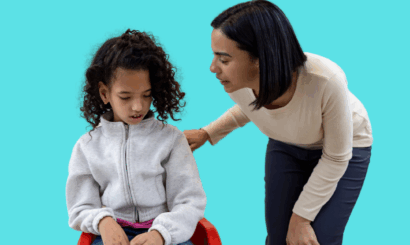
In Truth With Hope authors explore how communicating bad news to parents and carers must be recognized as a process rather than a one-time event.
In the sensitive and also practical learning module ‘Truth With Hope’, Professor Iona Novak and colleagues discuss the communication of bad news by exploring the processes through an ethical framework, and present comments from several parents to illustrate the impact that this process can have. The authors then provide an evidence-based approach to sharing ‘bad news’, developed in the field of cancer care (the six steps of the SPIKES framework) as a guide to this challenging but essential step in building a relationship with families.
What does it mean to be an ethical source of support? An important first step is to establish shared decision-making between families and professionals, underpinned by the belief that families know their child best and want to help. Even though a diagnosis can cause stigma, diagnostic labels can also open doors to intervention services, which most parents understandably want as soon their child is diagnosed.
This module will outline the major types of diagnostic and prognostic news, as well as evidence-based intervention decision-making that typically needs to be communicated to parents of children with cerebral palsy over the lifespan. It outlines an ethical and evidence-based framework for communicating this often difficult and complex information in a way that facilitates family coping, taking into consideration unique family characteristics.
01 Clinical scenario (video)
02 Prologue (video)
03 The ethics of sharing news
04 Non-maleficence
05 Autonomy
06 Beneficence
07 Justice
08 An evidence-based process for sharing news
09-15 SPIKES (Steps 1-6) (video)
16 Themes for discussion
17 Epilogue (video)
References
User Guide
Learning Account
Iona Novak, Professor, Cerebral Palsy Alliance, Discipline of Child and Adolescent Health, The University of Sydney, Australia
Marelle Thornton, Former President of the Board and Parent, Cerebral Palsy Alliance, Discipline of Child and Adolescent Health, The University of Sydney, Australia
Cathy Morgan, Research Fellow, Cerebral Palsy Alliance, Discipline of Child and Adolescent Health, The University of Sydney, Australia
Petra Karlsson, Research Fellow, Cerebral Palsy Alliance, Discipline of Child and Adolescent Health, The University of Sydney, Australia
Hayley Smithers-Sheedy, Research Fellow, Cerebral Palsy Alliance, Discipline of Child and Adolescent Health, The University of Sydney, Australia
Nadia Badawi, Chair of Cerebral Palsy, Cerebral Palsy Alliance, Discipline of Child and Adolescent Health, The University of Sydney; Grace Centre for Newborn Care, Children’s Hospital at Westmead, Discipline of Child and Adolescent Health, The University of Sydney, Australia
-
We offer clinicians and other professionals a set of guiding principles that overlap with and complement principles of ‘best practice’ and practical clinical wisdom. The authors are distinguished experts drawn from all over Europe and North America. The emphasis throughout is on clinical methods, the use of appropriate investigations and treatments, and the avoidance of unnecessary or potentially harmful interventions:
- Complements your clinical training to improve knowledge and clinical practice in an important but often neglected area of practice;
- Newly-recorded original video content for an immersive and personal learning experience;
- Interact with the material by answering reflective activities to immerse yourself in a personal response to ethical issues;
- Read further with references and supplementary materials;
- Receive a PDF certificate on completion, and documents of your submitted responses and personal notes.
This online resource is designed to help clinicians, therapists, nurses, as well as parents and families, to place practical ethical thinking at the heart of care. It will be very useful for doctors and professionals in training or already involved in child healthcare, including paediatric neurologists and paediatricians in senior positions, child psychiatrists in training, developmental specialists, rehabilitation specialists and policymakers.
Related Books

Related Courses





Ethics in Child Health: Paying attention to parental mental health: is this our responsibility?
Read more
Ethics in Child Health: Responding to requests for novel/unproven alternative and complementary treatments
Read more