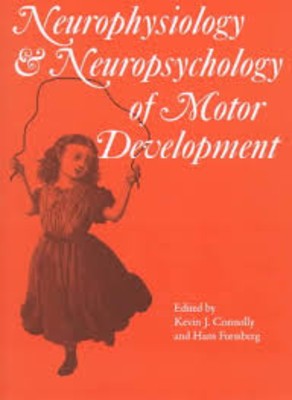
Neurophysiology and Neuropsychology of Motor Development

The central focus of this book is the development of skilled motor actions by children; commonplace but vital actions such as maintaining posture, walking, reaching and grasping, and manipulating objects and tools. It represents a state-of-the art report on motor development linking neurophysiological and neuropsychological approaches. Using examples from both normal and pathological development, contributions study pre and postnatal brain development and its relationship to movement, the importance of fetal movements, postural control in children, the neurobiology of locomotor development, neural mechanisms of grasping and typical patterns of behavioural change. New theoretical developments including adaptive model theory, dynamic systems theory, and the relationship between variability and stability in skill development are also critically reviewed.

Clinics in Developmental Medicine No. 143

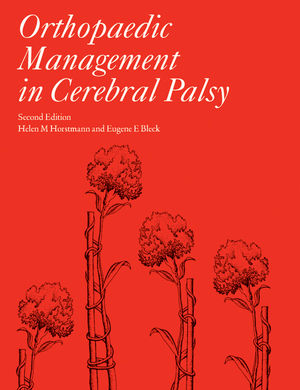
Orthopaedic Management in Cerebral Palsy, 2nd Edition

Comprehensive review of current methods of management and evaluation of the motor disorders of cerebral palsy.

  • Features the whole range of orthopaedic surgical procedures with commentary on each
  • Reviews the current epidemiology in the subject, offering perspective on prevention
  • Provides tables of gross motor performance to assess the measure of effectiveness of physical therapy
  • Describes methods of management, including: assistive technology, selective posterior rootlet rhizotomy, Botulinum toxin intramuscular injections and intrathecal Baclofen.

Clinics in Developmental Medicine No. 173-4

Paediatric Orthotics

Orthoses are externally applied medical devices used to prevent or correct musculoskeletal deformities and improve physical functioning; these devices are typically custom made. This is one of very few books on the subject of orthotics published in recent years and the only book focusing solely on the orthotic management of children.

The first part of the book considers the principles that are fundamental to orthotic management, including a review of biomechanics, consideration of clinical assessment methods, and the materials and fabrication techniques used to make orthoses. The second part of the book comprises several condition-specific chapters that consider the appropariate orthotic management of the more common conditions in childhood in the context of multidisciplinary care. The chapters include neuromuscular conditions such as cerebral palsy, myelomeningocoele and muscular dystrophy; and also congenital deformities and conditions arising in childhood. One chapter considers orthotic intervention for idiopathic scoliosis and another considers the sometimes controversial issue of protective and corrective headwear. Whilst by no means exhaustive, Paediatric Orthotics provides both a basic grounding in the subject together with practical guidance to help clinical practice.

Paediatric Orthotics will be of use, not only to orthotists but also to physical and occupational therapists, paediatricians, paediatric orthopaedic surgeons and physiatrists. The book is also essential reading for all students and clinicians involved in the physical management of children with disabilities.

Clinics in Developmental Medicine No. 175

Participation

This unique book focuses on enabling children and young people with neurodisability to participate in the varied life situations that form their personal, familial and cultural worlds.

Written in five parts, the book provides the reader with knowledge about the concept of participation; detailed understanding of how varying contexts influence participation outcomes; how to measure participation as an outcome and as a process; how to intervene to promote participation outcomes; and future directions and challenges. Chapters provide diverse examples of evidence-based practices and are enriched by scenarios and vignettes to engage and challenge the reader to consider how participation in meaningful activities might be optimised for individuals and their families. The book’s practical examples aim to facilitate knowledge transfer, clinical application and service planning for the future.

  • The only book to focus on participation in children with childhood onset neurodisability
  • This book brings together highly expert contributors, experienced in the field and up to date with current conceptual frameworks and research.
  • Vignettes, scenarios and real-life stories are used to challenge assumptions, support application to practice and drive future thinking.
  • By providing an international perspective on participation, the book addresses issues influencing engagement in meaningful activities across contexts and cultures.

Readership

This book will be of interest to practitioners including medical and allied health professionals, particularly: Physiotherapists, Occupational Therapists, Speech and Language Therapists, Psychologists and Neuropsychologists, Paediatric Neurologists, Paediatric Neurodisability specialists and specialist Nurses.

Additionally, Movement and Rehabilitation scientists as well as those working in Special Educational Needs and Social Care environments will find relevant information to support their work and inter-disciplinary practice and impact on policy. Other stakeholders, including consumers (parents and those with lived experience of childhood onset disability) and policy makers, may find information of value to their planning.

Video about the book

Watch the editors Christine Imms and Dido Green discuss the book below:

Clinics in Developmental Medicine

People with Hyperactivity

Clinics in Developmental Medicine No. 171
The last 10 years have seen major advances in the scientific understanding of ADHD. This book builds on them to provide a practical, comprehensive and evidence-based approach to clinical work with ADHD and hyperkinetic disorder, and to similar problems in people with complex neurodevelopmental disabilities. This is a book for professionals of all kinds who deal with hyperactive children and people with ADHD. It explains the science base of understanding it and gives practical step-by-step instructions on how to treat it – including informative leaflets for parents and teachers.

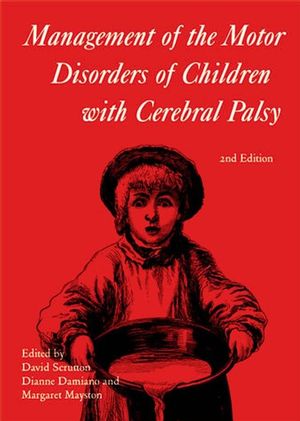
Management of the Motor Disorders of Children with Cerebral Palsy

Since the first edition of this book was published in 1984 the intensive debates about the ‘correct’ method of treatment for children with cerebral palsy have been resolved and it is now possible to describe what is generally agreed to be the optimal approach. This entirely rewritten new edition describes the most up-to-date thinking, with two new editors from America and Australia reflecting the worldwide picture. Coverage includes the coordination of care and the management team; the types of cerebral palsy; assessment; goal-setting; learning and neural plasticity; global therapeutic approaches as well as more focused (topical) therapies; the mechanisms of deformity, its prevention and treatment; and the transition to adult life. This book details the advancement of the subject from 1984 to 2002.

Clinics in Developmental Medicine No. 161

Measures for Children with Developmental Disabilities

Measurement of outcomes and their determinants is essential in informing decisions about treatment, and targeting those who may benefit most.

This book uses the International Classification of Functioning, Disability and Health (ICF-CY) to identify the best measures to use to assess a child’s developmental disabilities. It presents and reviews outcome measures across a wide range of attributes that are applicable to children and youth with developmental disabilities.

  • The ‘go to’ reference on assessment tools and outcome measures for children with neurodevelopmental disabilities
  • Quickly identifies the best measures or outcomes for therapy needs assessment or service provision
  • Uses the ICF-CY framework therefore facilitates the retrieval of one or more measures that are directly related to the components of this widely used classification scheme
  • Each chapter includes tables that provide a capsule summary of the primary attributes of a subset of key measures for ease of reference

This book is invaluable for clinicians and educators seeking an appropriate, psychometrically sound measure in a particular domain of functioning that can be used with an individual child or target population. It’s also a useful resource for researchers in the field of childhood disability.

Readership

Occupational therapists, physical therapists, speech-language pathologists, psychologists, physicians, nurses, and others who provide services to infants, children and youth with developmental disabilities; researchers investigating research questions pertaining to the field of childhood disability, university-based students in health-profession programs with courses related to the assessment of children and youth with developmental disabilities.

Clinics in Developmental Medicine No. 194-5
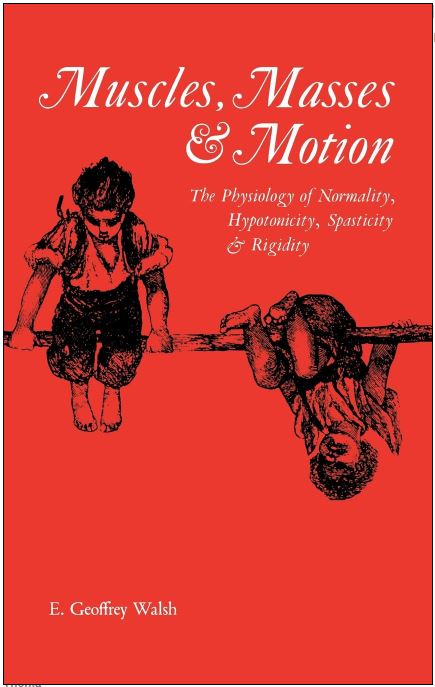
Muscles, Masses, and Motion

This book reviews normal muscle tone and how it differs in spastic, thixotropic and hypotonic patients. The book contains practical advice on measuring the postural system and will be of interest to pediatricians and also to physiologists involved in investigating muscle tone.

Clinics in Developmental Medicine No. 125

Myasthenia in Children

Myasthenia is a rare, but underdiagnosed and sometimes life-threatening disorder in children. There are no guidelines for diagnosing and managing these children, especially those with congenital myasthenia, a more recently recognised genetic condition, but there have been significant developments in identification and treatment of myasthenia in recent years. This book will help clinicians and families of children with this rare condition direct management effectively.

Myasthenia in Children describes the various genotypes and phenotypes of congenital myasthenic syndromes, their clinical features and management. Autoimmune myasthenia gravis and newly recognised myopathies with neuromuscular transmission defects are also covered. The book includes a client perspective and is full of practical tips from carers, service users and therapists with a broad multi-disciplinary treatment approach. This book will guide future holistic management of this rare but life changing condition for some children and their families.

  • Only book dedicated to this rare condition in children
  • Includes the latest developments on congenital myasthenia, a newly recognised condition
  • Uses a holistic, multi-disciplinary therapeutic approach to achieve best outcomes for children with this condition
  • Features the very latest treatment approaches
  • Includes practical management information for families and young persons with this condition, with one chapter written by the family of a child with myasthenia

Readership
Paediatricians, Paediatric neurologists, and allied health professionals, including physiotherapists, occupational therapists, psychologists and specialist nurses.

Clinics in Developmental Medicine

Neurodevelopmental Approach to Specific Learning Disorders

This volume considers the neurodevelopmental disorders such as dyslexia, dyscalculia, dysgraphia, clumsiness and indeed all those learning difficulties to be found in a ‘normal’ school population with an IQ of more than 70. Specific ideas about the causes of these disorders are presented along with very practical preventative and management information which will be welcomed by a wide range of professionals with an interest in paediatrics, neurology, developmental and educational psychology.

Clinics in Developmental Medicine No. 145