Disorders of Neuronal Migration

Disorders of Neuronal Migration addresses the various aspects of neuronal migration disorders in an ordered way. It will help the clinician to acquire insight as well as proficiency in diagnosis. Individual chapters describe subgroups including: – lissencephalies – subependymal heterotopia – non-lissencephalic cortical dysplasias – anomalies of the corpus callosum – hemimegalencephaly – schizencephaly – polymicrogyria and – multisystem disorders with impaired migration such as chromosomal and metabolic syndromes.

International Review of Child Neurology Series No. 5
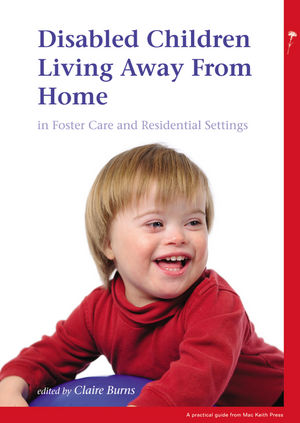
Disabled Children Living Away from Home in Foster Care and Residential Settings

Practical Guide

Disabled children who are unable to live at home are doubly needy: in addition to their disability, they are deprived of normal family life. Children who do not grow up in a stable, nurturing environment are unlikely to achieve their potential. Moreover, disabled children often have complex medical problems.

Disabled children living away from home are often involved with many different professionals: although individually these professionals may provide appropriate support, the sum of their efforts rarely adds up to the actions of a ‘good parent’.

Disabled Children Living Away from Home in Foster Care and Residential Settings considers the key issues that must be addressed when disabled children move from the family home to new accommodation. It provides insights into the difficulties that these children face and looks at how the standards of care that they receive might be improved. It also makes suggestions about how professionals might work more effectively with each other and with the children’s care-givers.

Disabled Children & Developing Countries

This book describes the situation of children with a range of disabilities living in developing countries. It evaluates currently available models of therapy, treatment and education, and how some of these have been applied where resources are scarce. Community-based solutions reached in developing countries, and the social and political context governing further progress, have implications in turn for professionals in developing countries. The book provides a critical basis of knowledge from which services for disabled children and their families may be planned appropriately. The international group of authors do not focus on any particular disability, nor on any one part of the world, but provide a broad coverage of issues concerning children and disability in developing countries.

Clinics in Developmental Medicine No. 136

Developmental Screening and the Child with Special Needs

This book is the outcome of many years’ study on the large population of preschool children in Dundee, Scotland, where, since 1973, there has been an extensive and comprehensive program of development screening. The research population numbered more than 5,000 children, and the aims of the study were to estimate the frequency and types of neurodevelopmental disabilities identified, to describe their management, to attempt to ascertain causative factors, and to look at the predictive value of screening and its therapeutic value. This book is essential reading for all concerned with the planning or implementation of screening and surveillance programs for preschool children, and should finally answer the question of whether or not screening is worth while.

Clinics in Developmental Medicine No.86

Developmental Examinations of Infant and Preschool Children

This practical guide is for primary-care doctors and health visitors involved in the detection of developmental problems in children whose parents are worried that their child is not developing like other children. It will be of assistance to paediatricians and paediatric neurologists in providing a developmental perspective in the diagnostic process in their work with children with chronic neurological disorders. The tests described have been standardized by the author and cover the essentials of developmental examination: history–including parents’ views of their child’s development; clinical tests of hearing; examination of visual behavior and visual acuity; observation of developing motor skills; language/performance profiles in which any substantial unevenness or an overall low score may reveal a developmental problem. In practice the range of average ability is wide, so a distinctive feature of this book is a standardized data base in graphical form that can be used to identify readily those children (lowest twenty percent) who warrant further specialist investigation or treatment. It is particularly relevant today when general practitioners are being directed to take an active role in such preventive work.

Clinics in Developmental Medicine No.112

Developmental Disability and Ageing

This handbook is aimed at clinicians and others who are engaged in caring for ageing adults with developmental disabilities. It is intended to inform understanding, promote assessment, assist in care planning, and especially to improve everyday living for this needy but sadly often neglected group of vulnerable individuals. The authors base their guidance on evidence, focusing on important insights that are likely to be valuable to the clinician interested in the care of the individuals on whose behalf the book has been prepared.

  • Highly practical guide for clinicians and others involved in the care of ageing adults with developmental disabilities
  • Boxes and summary tables present practical information concisely
  • Individual cases illustrate the text

Readership

Clinicians and others involved in caring for ageing adults with developmental disabilities.

A Practical Guide from Mac Keith Press

Developmental Assessment

Practical Guide

This handbook presents a new, practical and logical way of assessing development in preschool children that can be applied across the developmental spectrum.

The reader is taught how to confirm whether development is typical and if it is not, is signposted to the likely nature and severity of impairments with a plan of action.

The author uses numerous case vignettes from her 40 years’ experience to bring to life her approach with clear summary key points and helpful illustrations.

  • Clarifies ‘what is being tested’ and the rationale behind traditional tests
  • Includes tables showing the ages at which 50% and 90% of children achieve a specific domain
  • Describes permissible assessment adaptations for children with impairments

Full Book Review

Read the full book review by Karen Horridge published in Developmental Medicine and Child Neurology.

Readership

Paediatricians, paediatric neurologists, developmental psychologists, health visitors, specialist nurses, speech-, occupational- and physiotherapists, ophthalmologists, orthoptists, audiologists and audiometricians.

Development of Mature Walking

This important monograph summarizes a comprehensive study on the maturation of walking in normal children. Data are presented on anthropometric measurements; tests of developmental progress; time/distance parameters such as stride length and walking velocity; twelve joint angles on each side measured throughout the gait cycle; dynamic electromyography of phasic activity in seven lower-extremity muscle groups; and force measurements including vertical force, fore/aft shear, medial/lateral shear and torque. At each age, composite joint-angle graphs and time/distance parameters are brought together with film tracings of a representative child in that age group. In addition, advanced methods of statistical analysis have been applied to the joint-angle data to define prediction regions within which ninety-five percent of normal children should lie throughout the gait cycle. Finally, a ‘decision tree’ is presented from which a fitted age can be inferred for a subject based on non-age-specific data gathered in a motion analysis lab. Practical applications are demonstrated in a chapter devoted to two case studies.

Clinics in Developmental Medicine N0.104-105

Behavioural Approaches to Problems in Childhood

This is a very practical book on the value of behavioural techniques in the treatment of children with various disorders including hyperactivity, conduct problems, autism and communication difficulties. Written by an international group of experts, it provides practitioners in the field with a clear picture of the value of behavioural methodology. It also stresses the necessary assessment and evaluation procedures required in order to implement the techniques appropriately.

Clinics in Developmental Medicine No. 146

Autism

Written by child neurologists, this comprehensive, multi-authored volume on autism systematically discusses the classification, epidemiology and neurobiology of autism.

Autism lacks a unique etiology or specific pathology, so the behaviorally defined social deficits, language impairments and repetitive behaviors that define autism are explored from a developmental neurology perspective. The evidence suggesting that autism is a disorder of neuronal development is reviewed by experts on the genetics, neuroanatomy and neuroradiology, neurochemistry, immunology, and neurophysiology of autism. Chapters provide comprehensive reviews of the common neurological problems associated with autism such as epilepsy, sleep disturbances and motor and sensory deficits.

Neuropsychological assessment, medical and psychopharmacologic management, educational and behavioral interventions, and outcome are discussed within the clinical content of the practising neurologist. The research agenda needed to understand the neurology of autism is emphasized throughout the book and in the conclusion.

International Review of Child Neurology Series No. 7