Clinical Management of Craniosynostosis

Children with craniosynostosis are born with congenital deformities of the face and skull. In severe cases associated problems are common. The child who is not properly cared for can end up blind, deaf and with severe learning difficulties. In addition, they may be left with unacceptable facial deformities. Outside specialized craniofacial units, there is at present nowhere for those involved in primary or secondary care to go for help with the many practical problems that these children present. In this book, a distinguished team of editors have assembled experts in the field to introduce the non-craniofacial specialist to what can be achieved and how they can contribute to the child’s welfare. It will be essential reading for paediatricians seeking practical information about the management of these disorders, and for specialists in neurosurgery, ENT, ophthalmology, plastic surgery, maxillo-facial surgery, orthodontics, psychology, genetics, anaesthesia, audiology and speech therapy.

Clinics in Developmental Medicine No. 163

Cognition and Behaviour in Childhood Epilepsy

For many parents, cognitive and behavioral comorbidities, such as ADHD, autism and intellectual disability, are the real burden of childhood epilepsy. This title offers concrete guidance and treatment strategies for childhood epilepsy in general, and for the comorbidities associated with each epilepsy syndrome and their pathophysiology. The book is written by experts in the field with an important clinical experience, while chapters by clinical neuropsychologists provide a strong theoretical background.

Readership

Epileptologists, Paediatric Neurologists, Paediatricians and Neuropsychologists.

Full Book Review

Read the full book review by Ram Kumar published in Developmental Medicine and Child Neurology.

Clinics in Developmental Medicine

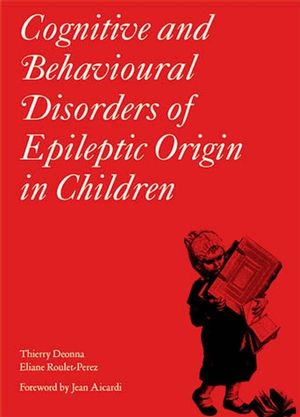
Cognitive and Behavioural Disorders of Epileptic Origin in Children

This book describes the effects that different kinds of epilepsy in children can have on the child’s behavior and cognitive development. It is mainly based on the authors’ extensive studies over many years. These are described in the book, together with the available diagnostic methods and therapies. It is written so that the various professionals dealing with such children (paediatricians, neurologists, psychologists) can see their contribution and have a general view of the complex interrelation between medical psychological and educational problems in these children.

Clinics in Developmental Medicine No. 168

Cranial Haemorrhage in the Term Newborn lnfant

Intracranial haemorrhage affects more than 1 liveborn term infant in 100. The range of aetiologies has been expanded from trauma due to breech or instrumental delivery, to birth asphyxia, haemorrhagic diathesis, infection and prenatal injury. A shift towards diagnosis in life has been brought about by the application of ultrasound, CT and NMR imaging. Survival of most affected infants has encouraged neonatologists and paediatric radiologists to describe their findings in the past decade, yielding a wealth of data. Medicolegal implications surrounding delivery and neonatal care have increased the demand for thorough description of perinatal intracranial events.

Clinics in Developmental Medicine No. 129

Disorders of Neuronal Migration

Disorders of Neuronal Migration addresses the various aspects of neuronal migration disorders in an ordered way. It will help the clinician to acquire insight as well as proficiency in diagnosis. Individual chapters describe subgroups including: – lissencephalies – subependymal heterotopia – non-lissencephalic cortical dysplasias – anomalies of the corpus callosum – hemimegalencephaly – schizencephaly – polymicrogyria and – multisystem disorders with impaired migration such as chromosomal and metabolic syndromes.

International Review of Child Neurology Series No. 5

Disorders of the Spinal Cord in Children

Spinal cord disorders have tended to be approached as adjuncts to disorders of the paediatric brain or peripheral nervous system. This is partly a function of numbers –  specifically spinal pathologies being less frequent than those of the brain and the peripheral neuromuscular system, partly a function of the relatively limited investigation techniques available before the advent of MRI and, at least to some degree, it is because the clinical evaluation of the spinal cord in young children is difficult and may be overshadowed by the manifestations of accompanying brain and peripheral neuromuscular symptomatology.

This is the first book to cover the range of paediatric spinal cord disease, its clinical assessment, appropriate investigation, its medical and neurosurgical management and neuro-rehabilitation.

It is likely that the role of the cord, in conditions ranging from neonatal neurological injury to shaken impact syndrome and in inflammatory and neurometabolic disorders and beyond, will continue to become more evident over coming years.

  • First comprehensive coverage of pediatric spinal medical and neurosurgical disorders, their investigations and management brings the whole topic into focus
  • Definitives chapters on neuro-imaging and neurophysiology

Readership

Paediatric neurologists, paediatric neurosurgeons, paediatric oncologists, paediatric neuroradiologists and neurophysiologists,  rehabilitation physicians and therapists.

Clinics in Developmental Medicine Series

A Handbook of Neurological Investigations in Children

Neurological disorders in children are common: families want to know what is wrong, why it happened, and whether it will happen again. Management and treatment depend on establishing the diagnosis, which usually requires investigations, but the number of possible neurological investigations is now very large indeed, and uncritical investigations may be seriously misleading and often costly.

This book, based on the authors’ vast combined personal experience, gives practical guidance on how to target any specific condition with the minimum of tests.

  • Part 1 is a brief distillation of advice on clinical history and examination, introducing the problems that beset those who deal with neurological disorders in childhood.
  • Part 2 outlines the investigations available to solve these diagnostic problems.
  • Part 3 takes a problem-oriented approach to the most appropriate investigations in the various clinical scenarios that may present to the practitioner: the starting point is the patient’s presentation, not the diagnosis.

Throughout, vignettes of real cases help to illustrate the use of the tests in different clinical situations.

The authors co-wrote the hugely popular Handbook of Neurological Investigations (‘the Blue Book’) 20 years ago. This new book, while closely following the highly successful approach of the earlier title, is thoroughly up to date, with fresh material, new case vignettes, and additional investigations covered.

A Practical Guide from Mac Keith Press

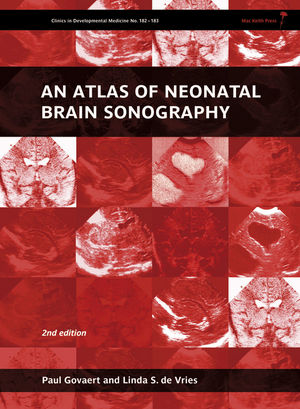
An Atlas of Neonatal Brain Sonography, 2nd Edition

This Atlas covers the entire spectrum of brain disease as studied with ultrasound, illustrated throughout with superb-quality images. It is aimed at neonatologists and radiologists confronted with everyday clinical questions on the neonatal ward.

Most newborn brain disorders can be identified with ultrasound; this book is therefore particularly useful in settings with limited MRI facilities. Prenatal ultrasound specialists will also find it valuable as a postnatal reference in their field of interest. Suggestions for differential diagnosis accompany all the sonographic findings, guiding the clinician in proceeding from an abnormal image to a diagnosis.

This second edition of the Atlas has been brought up to date to include the many advances in technique and interpretation that have been made in the past decade. The images have been replaced with new ones of higher quality, and all the line artwork has been standardised and improved.

Readership
Neonatologists, radiologists, neuroradiologists with an interest in neonatal ultrasound.

Clinics in Developmental Medicine No. 182-183

Behavioural Phenotypes

Increasing interest over recent years in the study of the influences of environment and genetic factors on behavioural disorder has come from a wide range of disciplines. These studies have subsequently been focused through the foundation of the Society for the Study of Behavioural Phenotypes, which forms the basis for assimilating new information and coordinating future research in this field. This volume from founder members of the society presents a distillation of thinking and reviews appropriate measurement schedules. Including research findings, explanation of concepts, genetic scientific techniques and methodological issues, this work will be welcomed by those with an interest in behavioural disorder at every level.

Clinics in Developmental Medicine N0.138

Childhood Headache, 2nd Edition

Headache as a common problem which has a significant impact on children’s quality of life. This book provides practising clinicians with a comprehensive source of advice and knowledge on the diagnosis and management of childhood headache disorders. It addresses the needs of clinicians looking after children with headache, whether it was in a primary care setting, a hospital general paediatric clinic or in a specialist paediatric neurology service.

Assessment of the child with chronic headache takes a central position, with two chapters to help early diagnosis of the child with a serious neurological disorder. The scientific basis of headache and migraine is clearly presented and simplified in the chapter of pathophysiology. Many clinical cases are presented to illustrate the complexity, the importance or the rarity of certain headache disorders and bring to life the relevant models of assessment and management. The book also highlights the results of recent research and provides critical analysis of commonly accepted classification of headache disorders and also provides pointers of future research needs.

  • Written by world experts who are leaders in the field of headache in children, giving a global perspective
  • Authors brings their clinical experience to life with real case vignettes
  • The only book of its kind to maintain an excellent balance of clinical focus and research
  • Explores the current evidence base into the causes and treatments of childhood headache
  • The clinical recommendations are applicable anywhere in the world
  • The book is easy to read and fully referenced

Readership

A comprehensive source of knowledge and guidance to practising clinicians looking after children with headache which includes many clinical examples to illustrate the difficulties in diagnosis or options for treatment. It is also a resource for researchers who are looking for a full analysis of the published studies.

Clinics in Developmental Medicine Series