Disorders of the Spinal Cord in Children

Spinal cord disorders have tended to be approached as adjuncts to disorders of the paediatric brain or peripheral nervous system. This is partly a function of numbers –  specifically spinal pathologies being less frequent than those of the brain and the peripheral neuromuscular system, partly a function of the relatively limited investigation techniques available before the advent of MRI and, at least to some degree, it is because the clinical evaluation of the spinal cord in young children is difficult and may be overshadowed by the manifestations of accompanying brain and peripheral neuromuscular symptomatology.

This is the first book to cover the range of paediatric spinal cord disease, its clinical assessment, appropriate investigation, its medical and neurosurgical management and neuro-rehabilitation.

It is likely that the role of the cord, in conditions ranging from neonatal neurological injury to shaken impact syndrome and in inflammatory and neurometabolic disorders and beyond, will continue to become more evident over coming years.

  • First comprehensive coverage of pediatric spinal medical and neurosurgical disorders, their investigations and management brings the whole topic into focus
  • Definitives chapters on neuro-imaging and neurophysiology

Readership

Paediatric neurologists, paediatric neurosurgeons, paediatric oncologists, paediatric neuroradiologists and neurophysiologists,  rehabilitation physicians and therapists.

Clinics in Developmental Medicine Series

Clinical Management of Craniosynostosis

Children with craniosynostosis are born with congenital deformities of the face and skull. In severe cases associated problems are common. The child who is not properly cared for can end up blind, deaf and with severe learning difficulties. In addition, they may be left with unacceptable facial deformities. Outside specialized craniofacial units, there is at present nowhere for those involved in primary or secondary care to go for help with the many practical problems that these children present. In this book, a distinguished team of editors have assembled experts in the field to introduce the non-craniofacial specialist to what can be achieved and how they can contribute to the child’s welfare. It will be essential reading for paediatricians seeking practical information about the management of these disorders, and for specialists in neurosurgery, ENT, ophthalmology, plastic surgery, maxillo-facial surgery, orthodontics, psychology, genetics, anaesthesia, audiology and speech therapy.

Clinics in Developmental Medicine No. 163

Cognition and Behaviour in Childhood Epilepsy

For many parents, cognitive and behavioral comorbidities, such as ADHD, autism and intellectual disability, are the real burden of childhood epilepsy. This title offers concrete guidance and treatment strategies for childhood epilepsy in general, and for the comorbidities associated with each epilepsy syndrome and their pathophysiology. The book is written by experts in the field with an important clinical experience, while chapters by clinical neuropsychologists provide a strong theoretical background.

Readership

Epileptologists, Paediatric Neurologists, Paediatricians and Neuropsychologists.

Full Book Review

Read the full book review by Ram Kumar published in Developmental Medicine and Child Neurology.

Clinics in Developmental Medicine

Cognitive and Behavioural Disorders of Epileptic Origin in Children

This book describes the effects that different kinds of epilepsy in children can have on the child’s behavior and cognitive development. It is mainly based on the authors’ extensive studies over many years. These are described in the book, together with the available diagnostic methods and therapies. It is written so that the various professionals dealing with such children (paediatricians, neurologists, psychologists) can see their contribution and have a general view of the complex interrelation between medical psychological and educational problems in these children.

Clinics in Developmental Medicine No. 168

Communicating without Speech

This book is aimed at health professionals treating children who fail to develop adequate speech due to complex neurological conditions or learning disabilities and may require augmentative and alternative communication (AAC) systems.

By presenting current research and accepted good practice in the field of AAC, authors give detailed information on the neurology of speech and language, and offer guidelines for the assessment of non-speaking children. Issues of prognosis for speech, the timing of intervention and the importance of working within a multidisciplinary framework are discussed. The central role of families and schools in the successful introduction and support of AAC for social communication and curriculum access is recognised. A range of AAC systems and resources are described, and the views of AAC users and their families represented. This is essential reading for clinicians who treat non-speaking children, and the therapists and other professionals who support these children.

Clinics in Developmental Medicine No. 156

Comorbidities in Developmental Disorders

In the last decade the term ‚’comorbidity‚’ has gained popularity in the field of paediatric neurodisability, with the increasing recognition that many conditions are rarely present in isolation. Within this field, the term is often used to refer to the co-occurrence of conditions more frequently than would be expected by chance, which can include instances where one condition causes the other, where they share a common cause (for example, genetic), or where they are in fact manifestations of a single condition.

Whether it is valid to use the term ‚’comorbidity‚’ in all these situations, and how precisely it should be used, is something that the contributors to this book grapple with in their own fields of interest. The contributors, all world experts in their fields, also discuss what we can learn from the presence of comorbidities, however defined, about the aetiology and treatment of neurodevelopmental disabilities. In particular, they demonstrate how our increasing understanding of the mechanisms underlying the common association of many ‘comorbidities‚’ is helping us to understand the natural history of these conditions and improve our management of them.

  • This book examines the concept of ‘comorbidity’ in developmental disorders
  • World experts explain the mechanisms underlying the common association of many conditions
  • The contributors review the implications for treatment and management

Readership
Paediatricians, paediatric neurologists, child psychiatrists, neurodevelopmentalists, and physical, occupational and speech therapists working with children with developmental disabilities.

Clinics in Developmental Medicine No. 187

Congenital Hemiplegia

This is a comprehensive review of congenital hemiplegia for the clinician covering all aspects from etiology and pathology to clinical assessment and management, whether orthopaedic, neurological or psychological. The team of expert international contributors highlight the many quite distinct problems of hemiplegia and review all the current approaches. Probable future developments are also described, especially unilateral hemisphere lesions, a topic currently of great interest to basic science researchers.

Clinics in Developmental Medicine No. 150

Cranial Haemorrhage in the Term Newborn lnfant

Intracranial haemorrhage affects more than 1 liveborn term infant in 100. The range of aetiologies has been expanded from trauma due to breech or instrumental delivery, to birth asphyxia, haemorrhagic diathesis, infection and prenatal injury. A shift towards diagnosis in life has been brought about by the application of ultrasound, CT and NMR imaging. Survival of most affected infants has encouraged neonatologists and paediatric radiologists to describe their findings in the past decade, yielding a wealth of data. Medicolegal implications surrounding delivery and neonatal care have increased the demand for thorough description of perinatal intracranial events.

Clinics in Developmental Medicine No. 129

Crying as a Sign, a Symptom and a Signal

Crying as a Sign, a Symptom and a Signal brings the reader up to date on new evidence concerning the developmental and clinical significance of infant crying in the first few months and years of life.

Initially studied as a sign of disease, crying is now being understood not only as a sign, but also as a symptom of problematic functioning in early development.

We now know much more about normative patterns of development of infant crying and how they may be manifest in a variety of clinical settings (emergency room complaint, painful procedures, colic, temper tantrums, non-verbal and mentally challenged infants). This has brought about a new conceptualization of the significance of early infant crying which an international team of experts describe and examine.

In this authoritative clinical text, both historical and methodological perspectives are brought to a multidisciplinary synopsis of the new understanding of this infant behaviour.

Clinics in Developmental Medicine No. 152

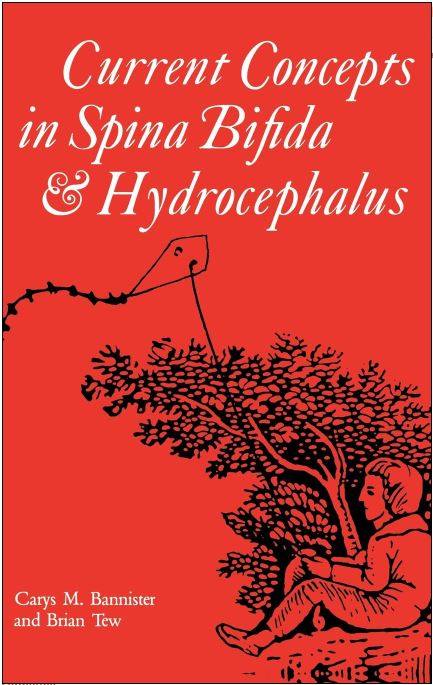
Current Concepts in Spina Bifida and Hydrocephalus

This book discusses all aspects of the effects of spina bifida and hydrocephalus on the fetus, the child, and the adolescent.

Chapters review neurosurgical techniques, perinatal death and malformation, together with the effects of spina bifida and hydrocephalus on behaviour and education.

Clinics in Developmental Medicine No. 122