
Books
Filter by category
Filter by format
Filter by series
New releases
Bestsellers


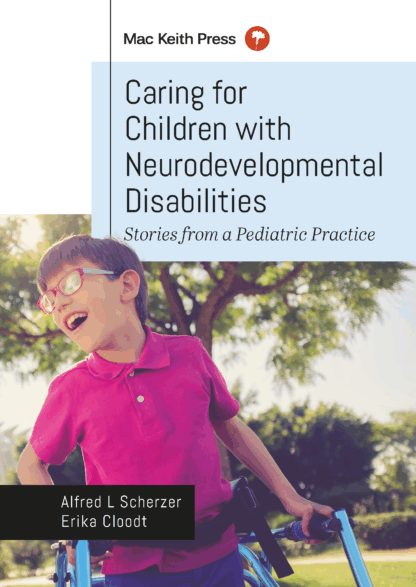
Caring for Children with Neurodevelopmental Disabilities
Stories from a Pediatric Practice
Ways to buy
Paperback edition (complete book)
£45.00
Buy ebook edition (Amazon)
Buy ebook edition (Apple Books)
Caring for Children with Neurodevelopmental Disabilities is a powerful collection of narrative clinical stories drawn from the long career of developmental pediatrician Dr. Alfred L Scherzer. Focused on children with disabilities and their families, each chapter includes a pediatrician’s perspective, a real-life story, and reflective commentary. These deeply human stories illuminate the complexities of disability care, offering nuanced insights into clinical challenges, ethical dilemmas, family dynamics, and the lifelong impact of early intervention.
Rather than clinical guidelines, these are personal recollections meant to spark reflection, discussion, and empathy. They emphasize the importance of patient- and family-centered care, the role of storytelling in medical education, and the value of lived experience alongside professional expertise. From navigating diagnoses to balancing autonomy and protection, the narratives underscore the emotional and societal dimensions of childhood-onset disabilities.
The book supports professional learning for clinicians working with children with neurodevelopmental disabilities; strengthens team communication, and offers validation and insight for families navigating similar experiences.
Author Video
Foreword
Bernard Dan
Acknowledgments
1 Introduction
2 Perspectives on the Stories
3 Albert
Healthcare Providers Assisting Parental Acceptance of Down Syndrome
4 Bao Hong
Growth and Development in Cerebral Palsy Through Continuous Parental Involvement
5 Bobby
When to Recognize Limits and Set Realistic Goals with Spina Bifida
6 Brad
When There Is No Clear Solution to Unresolved Conflict Over ADHD Medication
7 Christine and Charlie
Managing Acceptance and Clinical Bias in Family-Centered Care
8 Christopher
When Ability in a Child with Down Syndrome Overcame Bullying
9 Eddie
The Unique Abilities and Positive Outcome for an Adult with Intellectual Disability
10 Howard
A Family’s Search for Answers for Their Child with Autism
11 James
Addressing Excessive Parental Care of a Child with Cerebral Palsy
12 Jay
When Delayed Diagnosis Affected the Development of a Child with ADHD
13 Jimmy and Gayle
A Parent’s Journey in Understanding and Accepting Her Children’s ADHD
14 Joseph
How Family Counseling Can Help Resolve Conflict and Enable Effective Treatment of Tourette Syndrome
15 Justin
Assisting Families to Move Towards Realistic Expectations of Cerebral Palsy
16 Krysten
Long-Term Professional Relationships and Severe Behavioral Challenges in Hydrocephalus
17 Margaret
Helping Parents Recognize the Potential in Down Syndrome
18 Moira
Fostering Independence in Spina Bifida Through Family and Medical Support
19 Nilda
Alternatives for Care and Long-term Management for the Child with Multiple Non-Progressive Disabilities
20 Peter
Abuse of Medication and Family Support for Rehabilitative Care in ADHD
21 Raymond
When a Parent’s Priorities Conflict with the Medical Needs of a Child with Cerebral Palsy
22 Robert
How Community Participation Can Foster Motivation in ADHD
23 Ronnie
Helping Parents Navigate Alternative Therapies for Cerebral Palsy Treatment
24 Sarah
Late Diagnosis of Autism Spectrum Disorder through Inter-Physician Referral
25 Scott
Managing Care and Attempting to Foster Independence in a Child with Lesch-Nyhan Syndrome
26 Tanya
The Resilient Family of a Child with Cerebral Palsy Maintaining Professional Boundaries
27 Tommy
When Complex Family Dynamics and History Affect ADHD
28 Vasant
A Fully Functioning Independent Adult Despite a History of Social Deprivation and Multiple Disabilities
Index
‘In this book, a series of narrative clinical stories…present nuanced, human-centred perspectives that challenge us to reflect on the ways in which healthcare systems, societal expectations, and personal biases shape the experiences of children and families navigating disability.’
Bernard Dan
Professor, Université Libre de Bruxelles (ULB); Paediatric neurologist and rehabilitation physician, Inkendaal Rehabilitation Hospital, Belgium
'I began reading this book with great joy and anticipation. Alfred Scherzer has long been a revered figure in the American Academy for Cerebral Palsy and Developmental Medicine (AACPDM), serving the Academy as President in 1986 and Historian for many years, including during my own tenure as a Director at Large. His ability to share stories and offer his experience was formative for me as for many others, and I eagerly welcomed the opportunity to read a collection of his clinical wisdom.
As both an educator and lifelong student, I recognize that stories are the experiences that stay with us—they serve as scaffolding upon which facts and knowledge are built. The human desire to understand others is likely what drew many practitioners to medicine in the first place. Stories give relevance and meaning to knowledge learned in lectures, textbooks, or scientific articles. Indeed, qualitative research and single-case studies are valuable components of the evidence that informs our evidence-based practice.
In this book, Dr Scherzer has curated 28 stories that illuminate the complex and multifaceted nature of neurodevelopmental disabilities, drawing from his experience around the globe. He skillfully avoids overwhelming the reader with standardized outcome measures, imaging findings, or medical jargon. Instead, he invites us into the therapeutic space—into the relationships between parents, children, and physicians. This approach encourages readers to reflect on their own ideas, experiences, and perceptions. In fact, this is the essence of where the book's lessons lie: the possibility for a child to thrive requires a balanced view of their personal strengths and unique capabilities, and family and environmental circumstances that influence their function, alongside any lab tests or movement challenges we may analyze as clinical providers.
The ‘How to Use This Book’ guide offers practical suggestions for engaging with the material and reflects the thoughtful curation behind the work and is an essential stop for all readers before diving into the stories.
Complementing the narratives, Erika Cloodt (of Lund University, Sweden) enriches each chapter with thought-provoking and reflective questions designed for both new and experienced clinicians. These prompts encourage personal reflection and discussion with colleagues, reinforcing the habit of reflective practice—an essential component of clinical reasoning and compassionate care. Each chapter is just the right length: enough story to evoke a response and direct attention to a specific topic, with ample space for deeper exploration. The habit of reflective practice is important to cultivate along with clinical reasoning and other aspects of care and this book is an invitation and a method by which to do this.
By expecting readers to bring their own experiences and perspectives into each story, the authors have created a work that is timeless in its relevance. They encourage curiosity, challenge assumptions, and foster a holistic understanding of each family's journey. I look forward to sharing this book with my students and colleagues and engaging in meaningful conversations for years to come'.
Theresa Sukal-Moulton
Northwestern University – Physical Therapy and Human Movement Sciences, Chicago, IL, USA


