
Books
Filter by category
Filter by format
Filter by series
New releases
Bestsellers



Spina Bifida
Understanding and managing the condition across the lifespan: A practical guide for families
Ways to buy
Paperback edition (complete book)
£45.00
Buy ebook edition (Amazon)
Buy ebook edition (Apple Books)
Spina Bifida breaks down the medical complexity of the condition into a clear, lifelong roadmap, combining world-class clinical expertise with lived experiences to empower all those involved from diagnosis to adulthood.
Whether you are an individual navigating your own care, a parent or family member supporting a loved one, or a healthcare professional looking for a broader perspective, this practical guide offers the expert-backed clarity needed to manage spina bifida with confidence.
“This book does a phenomenal job of describing all the different ways the condition can affect a person. It also caters to different audiences—people with spina bifida, parents, and those who take care of people with the condition.”
—GRACIE HADLICH, AN ADULT LIVING WITH SPINA BIFIDA
“This handsome resource belongs in the hands of every individual with spina bifida and on the shelf of every professional serving this complex population.”
—JONATHAN CASTILLO, MD, MPH, FAAP
“Spina Bifida is a highly accessible resource that weaves together medical expertise with practical information for people living with the condition.”
—NIENKE DOSA, MD, MPH
Key features:
- Clinical excellence: Delivers detailed medical insights and best-practice evidence-based treatment options.
- Holistic perspective: Explores how spina bifida impacts development, participation, and overall quality of life.
- Lifelong focus: Provides tailored guidance that evolves alongside the needs of children, adolescents, and adults.
- Empowered outcomes: Equips families with the tools and confidence to partner effectively with healthcare teams for optimal long-term health.
Read a Q&A with author Dr. Kelly Cho, pediatric physiatrist and medical director of the pediatric spina bifida program at Gillette Children’s.
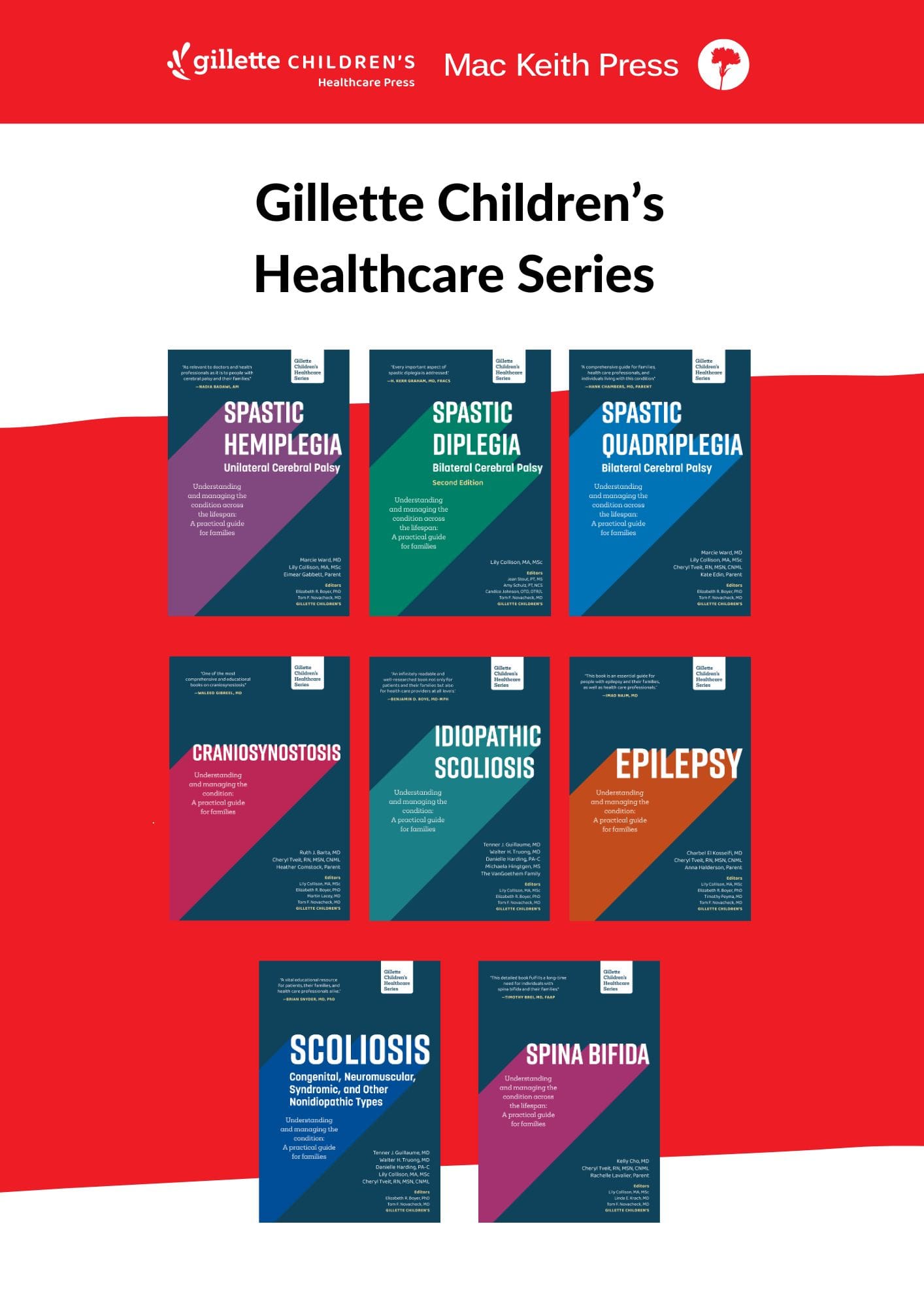
The Gillette Children’s Healthcare Series distills medical complexity into clear, actionable roadmaps for childhood-acquired physical and neurological conditions. By bridging the gap between clinical research and daily reality, this definitive collection provides a vital guide for those living with a lifelong condition.
Whether you are an individual navigating your own health journey, a parent or family member supporting a loved one, or a healthcare professional seeking a broader multidisciplinary perspective, this series provides the expert-backed clarity needed to manage the condition with confidence.
Co-published by Mac Keith Press and Gillette Children’s Healthcare Press, the series is built on a foundation of collaborative expertise. Every book combines evidence-based, best-practice treatments led by medical specialists with the invaluable lived experiences of individuals and families.
You can now purchase the complete Gillette Children’s Healthcare Series bundle at a 30% discount via this link.
Other titles in the series include:
• Craniosynostosis
• Idiopathic Scoliosis
• Spastic Hemiplegia—Unilateral Cerebral Palsy
• Spastic Quadriplegia—Bilateral Cerebral Palsy
• Spastic Diplegia—Bilateral Cerebral Palsy, second edition
• Epilepsy
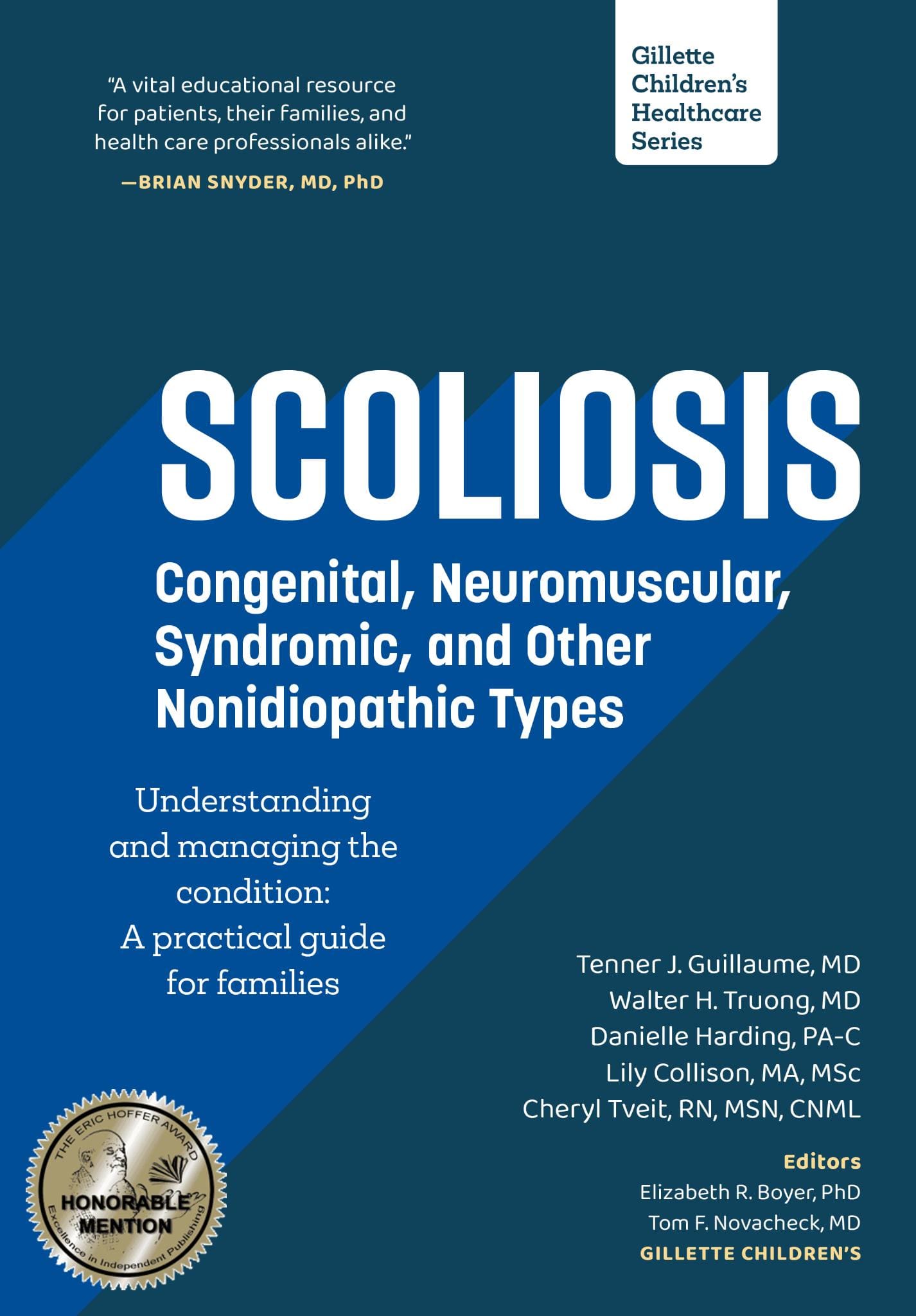
• Scoliosis—Congenital, neuromuscular, syndromic, and other nonidiopathic types
• Osteogenesis Imperfecta
Author and Editors
Series Foreword
Series Introduction
- Neural tube defects and the central nervous system
1.1. Introduction
1.2. Prevalence and risk factors
1.3. Diagnosis
1.4. Embryology and neural tube defects
1.5. Anatomy and function of the central nervous system
with Teresa Schultz APRN, CNP-Pediatrics
Key points Chapter 1
- An overview of spina bifida
2.1. Introduction
2.2. Impact of spina bifida on the spine, spinal cord, and brain
with Teresa Schultz, APRN CNP-Pediatrics
2.3. Types of spina bifida
2.4. Prognosis
2.5. Functional ability
2.6. Associated conditions
Key points Chapter 2
- Spina bifida in the prenatal to newborn stage
3.1. Introduction
3.2. Prenatal counseling
3.3. Prenatal and postnatal surgery
3.4. Pregnancy and birth considerations
3.5. The newborn with spina bifida: care and considerations
Key points Chapter 3
- Anatomy and function
4.1. Introduction
4.2. The bowel
with Liza Beilke May, DNP, APRN, CPNP-PC
4.3. The bladder
with Liza Beilke May, DNP, APRN, CPNP-PC
4.4. The reproductive system
4.5. The musculoskeletal system
with Kyleen Kriha, PT
Key points Chapter 4
- Management of spina bifida: An overview
5.1. Introduction
5.2. Best practice for spina bifida
5.3. Getting the most out of appointments
5.4. Overall management
5.5. Nutrition
5.6. Mobility
5.7. Exercise and physical activity
with Kaitlin Lewis, CTRS
Key points Chapter 5
- Neurological conditions and their management
with Teresa Schultz, APRN, CNP-Pediatrics
6.1. Introduction
6.2. Hydrocephalus
6.3. Chiari malformation type II
6.4. Syrinx
6.5. Tethered cord
6.6. Seizures and epilepsy
6.7. Management of neurological conditions
Key points Chapter 6
- Neurogenic bowel and bladder
with Liza Beilke May, DNP, APRN, CPNP-PC, Alonso Carrasco, MD, Jenna Katorski, APRN, CNP, Katherine Nelson, DNP, APRN, CNP, and David Vandersteen, MD
7.1. Introduction
7.2. Neurogenic bowel
7.3. Neurogenic bladder
Key points Chapter 7
- Management of neurogenic bowel
with Liza Beilke May, DNP, APRN, CPNP-PC, Alonso Carrasco, MD, Jenna Katorski, APRN, CNP, Katherine Nelson, DNP, APRN, CNP, and David Vandersteen, MD
8.1. Introduction
8.2. Bowel health: program, equipment, and cleanout
8.3. Neurogenic bowel management
8.4. Bowel-related complications
Key points Chapter 8
- Management of neurogenic bladder
with Liza Beilke May, DNP, APRN, CPNP-PC, Alonso Carrasco, MD, Jenna Katorski, APRN, CNP, Katherine Nelson, DNP, APRN, CNP, and David Vandersteen, MD
9.1. Introduction
9.2. Neurogenic bladder management
9.3. Bladder management evaluation
9.4. Urinary system complications
Key points Chapter 9
- Reproductive system conditions and their management
10.1. Introduction
10.2. Conditions of the reproductive system
10.3. Management of conditions of the reproductive system
Key points Chapter 10
- Musculoskeletal conditions
with Stephen England, MD, Megan Haselbauer, PA-C, and Kyle Miller, MD
11.1. Introduction
11.2. Bone, joint, and muscle conditions
11.3. Lower extremity conditions
11.4. Hip and spine conditions
11.5. Upper extremity conditions
11.6. Short stature
Key points Chapter 11
- Management of musculoskeletal conditions
with Stephen England, MD, Megan Haselbauer, PA-C, and Kyle Miller, MD
12.1. Introduction
12.2. Physical therapy
with Kyleen Kriha PT
12.3. Assistive technology
with Joseph Berdan, ATP, Danielle Harding, PA-C, Kyleen Kriha, PT, Kaitlin Lewis, CTRS, and Kathryn Pimentel, MPO, CPO
12.4. Medical management, casting, and orthopedic surgery
Key points Chapter 12
- Skin Conditions and their management
with Joseph Berdan, ATP, and Jennifer Wilhelmy, CWCN, APRN, CNP
13.1. Introduction
13.2. Insensate skin
13.3. Skin breakdown and wounds
13.4. Pressure injuries and pressure injury prevention
13.5. Wound management
13.6. Wound complications
Key points Chapter 13
- Other physical conditions and their management
14.1. Introduction
14.2. Obesity
14.3. Metabolic syndrome
14.4. Lymphedema
14.5. Sleep-related breathing disorders
with John Garcia, MD
14.6. Pain
14.7. Latex allergy
14.8. Eye conditions
Key points Chapter 14
- Neuropsychological and mental health conditions and their management
with Richard DiPrima, PsyD, LP, Margaret Grace, PhD, LP, Erin Ingvalson, MS, CCC, SLP, and Candice Johnson, OTD, OTR/L
15.1 Introduction
15.2 Neuropsychological conditions and testing, and neurocognitive profile
15.3 Management of neuropsychological conditions
15.4 Mental health conditions and their management
Key points Chapter 15
- Community integration, education, independence, and transition to adult health care
with Tori Bahr, MD, and Giancarlo Perez-Albela, MD
16.1. Introduction
16.2. Community integration
16.3. Education
16.4. Adaptive driving
16.5. Independence
16.6. Transition to adulthood and adult health care
Key points Chapter 16
- Adulthood
with Jenna Katorski, APRN, CNP, Katherine Nelson, DNP, APRN, and Giancarlo Perez-Albela, MD CNP
17.1. Introduction
17.2. Aging in the typical population
17.3. Aging with spina bifida
17.4. Management of spina bifida in adulthood
17.5. Employment
17.6. Family planning, pregnancy, and parenting
Key points Chapter 17
- Living with spina bifida
- Further reading and research
with Elizabeth R. Boyer, PhD
Acknowledgments Appendices (Online)
Appendix 1: Neurons (nerve cells)
Appendix 2: Multidisciplinary team members and their roles Appendix 3: Epilepsy management
Appendix 4: Gait analysis
Appendix 5: Transfer aids and vehicle transportation Appendix 6: Noninvasive assisted ventilation
Glossary
References
Index


