
Books
Filter by category
Filter by format
Filter by series
New releases

Bestsellers


Recent Advances in the Neurological and Neurodevelopmental Impact of HIV
Ways to buy
Hardback edition (complete book)
£100.00
Buy ebook edition (Amazon)
Buy ebook edition (Apple Books)
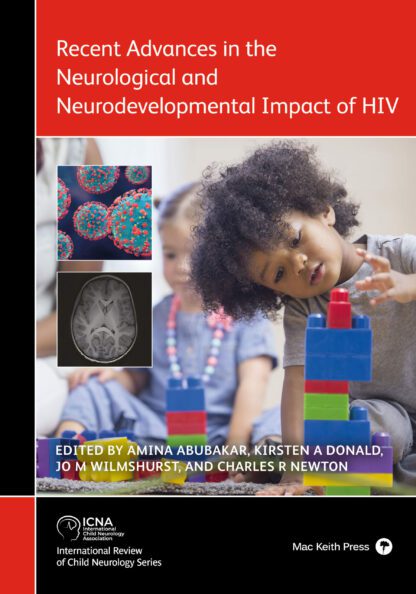
Recent Advances in the Neurological and Neurodevelopmental Impact of HIV brings together world-leading experts in the field of HIV, to provide new and critical insights into HIV treatment and management for children and adolescents. Those infected with HIV are living longer thanks to antiretroviral drugs, and HIV-related neurological and neurodevelopmental disorders therefore require urgent attention, particularly complications which arise from long-term medication use. The authors summarise key findings in these important areas, as well as gaps in research and implications for paediatric HIV work. Readers of Recent Advances in the Neurological and Neurodevelopmental Impact of HIV will discover ways of optimising the neurological health of children and adolescents living with HIV through better care provision and earlier intervention.
⦁ Outlines the important clinical neurological issues facing children and young adults with HIV infection
⦁ Presents up-to-date diagnostic and treatment approaches
⦁ Provides practical clinical strategies to improve the care of children and adolescents with HIV
Recent Advances in the Neurological and Neurodevelopmental Impact of HIV is an essential resource for all clinicians involved in the care of children and adolescents with HIV and their families, including doctors, paediatricians, psychologists, and other health practitioners and researchers.
Foreword
Preface
1. Epidemiology of HIV
Charles R Newton
2. Pathogenesis of HIV Involvement in the Central Nervous System
Charles R Newton
3. Neurological Manifestations of HIV Infection
Charles K Hammond and Jo M Wilmshurst
4. Neuroimaging in Children with HIV
Nicky Wieselthaler, Jacqueline Hoare, and Tracy Kilborn
5. HIV Encephalopathy
Kirsten A Donald, Nelleke G Langerak, Aleya Remtulla, and Theresa N Mann
6. Seizures and Epilepsy in Children Living with HIV
Pauline Samia, Subira Anzaya, and Jo M Wilmshurst
7. Neuroinfections in Children Infected with HIV
Brian Eley, Babatunde Ogunbosi, Ebrahim Banderker, and Charles K Hammond
8. Cerebrovascular Disease
Charles K Hammond and Alvin Ndondo
9. Tumours of the Central Nervous System in Children with HIV
Rajeshree Govender, Alan Davidson, and Beverley G Neethling
10. HIV-associated Immune Reconstitution Inflammatory Syndrome of the Central Nervous System
Rajeshree Govender and James Nuttall
11. The Effect of HIV Infection on Neurodevelopment, from Birth to 3 Years
Louisa R Mudawarima, Alliya Mohamed, and Kirsten A Donald
12. Neurodevelopmental and Mental Health Outcomes of HIV in School-age Children
Adam Mabrouk, Derrick Ssewanyana, and Amina Abubakar
13. Neurobehavioural Manifestations of HIV in Adolescence
Derrick Ssewanyana, Moses K Nyongesa, and Amina Abubakar
14. Long-term Outcomes in Adults Living with HIV
Patrick N Mwangala, Derrick Ssewanyana, Moses K Nyongesa, Felix Hosea, and Amina Abubakar
15. Neurodevelopment of Children who are HIV-exposed and Uninfected
Catherine J Wedderburn, Shunmay Yeung, and Kirsten A Donald
16. Antiretroviral Therapy and the Nervous System in Perinatally Infected Children
Eric Decloedt and Karen Cohen
17. Interventions to Enhance Developmental Outcomes of HIV-affected Children and Adolescents
Amina Abubakar, Moses K Nyongesa, Stanley W Wanjala, Micaela Rice, Sevil Ozdemir, Patrick N Mwangala, Judith K Bass, and Michael J Boivin
18. Conclusions and Future Directions
Jo M Wilmshurst and Amina Abubakar
This wide-ranging new book takes us through the neurological and neurodevelopmental impact of HIV through the lens of pediatrics. Compiled and written by clinician-researchers from sub-Saharan Africa predominantly, the chapters provide comprehensive, well-written reviews of the major research findings in this field – informative for both novice and expert alike. Importantly, the chapters also convey the authors' considerable experience in applying these research findings in real-world clinical settings, particularly in the low-resource health systems where the impact of the HIV pandemic is most felt. This gives the book a richness and immediacy beyond simply providing information.
The first half of the book discusses the clinical manifestations of HIV infection in children and young people. Severe HIV encephalopathy in infants is one of the more tragic hallmarks of an era when HIV infection was a devastating, rapidly progressing disease. This was before the advent of effective antiretroviral treatment (ART). Effective ART changed this disease profile into one of a complex chronic disease. Children respond equally well to ART and have the most to gain from treatment, but many challenges in diagnosis and access lead to treatment coverage for children that lags behind that of adults. Infants and young children are also entirely dependent on their caregivers for medication adherence. Social stigma and the practical difficulties of daily medication adherence with multiple medications (often not optimally formulated) translates to generally worse ART outcomes in children. Primarily for these reasons, a spectrum of HIV-associated neurological and neurodevelopmental complications continues to occur. In addition, antiretroviral drugs mostly do not penetrate the central nervous system where HIV can persist. This may be one of the reasons for the continued occurrence of neurological disorders in otherwise well-treated children and young people.
The second half of the book includes a series of chapters that take a developmental perspective. These chapters start with birth to 3 years, then move on to school age, then to adolescence, and finally to the growing cohorts who acquired perinatal infection but, thanks to ART, are now surviving into adulthood. Cognitive and behavioral problems take center stage here and the intimate tangle of biological and social vulnerabilities become apparent. The HIV pandemic leads directly to some social factors that have an adverse impact on neurodevelopmental conditions. These include parental mortality and morbidity, familial instability, parental depression, substance use, and fear of disclosure amongst others. The HIV pandemic is also superimposed on existing social determinants of health (such as poverty, discrimination, unemployment, etc.) that contribute to a vicious cycle of adverse outcomes. It is this context that makes one greatly appreciate the careful attention this book gives to interventions. Several of these interventions have now been proved to alleviate some of the consequences of this vicious viral–social interaction.
Finally, the book considers neurodevelopment of children who are born to women living with HIV but who escape from acquiring infection themselves, so-called HIV-exposed uninfected. With universal ART for adults, the vast majority of children born to mothers with HIV do not acquire infection. Prior to the ART era, infants who escaped HIV infection appeared to have immune abnormalities putting them at increased risk of morbidity and mortality. The verdict is still out on whether these and other risks, including neurodevelopmental problems, persist into the current era, but the situation offers a fascinating research opportunity to study the effects of maternal viral infections on neurodevelopmental outcomes in offspring. Overall, this book has something for everyone, regardless of the extent of their past engagement with this topic.
Louise Kuhn, Columbia University Irving Medical Center - Gertrude H. Sergievsky Center, New York, NY, USA. Available at: https://onlinelibrary.wiley.com/doi/10.1111/dmcn.15817
The epidemiology of human immunodeficiency viruses (HIV), including the global burden, has changed considerably over the years. Before the introduction of antiretroviral therapy (ART) – when central nervous system involvement was seen in almost 90% of children affected with HIV – to today, there have been major advances in the understanding and management of HIV. With increasing survival of children and adults with HIV, this new book entitled Recent Advances in the Neurological and Neurodevelopmental Impact of HIV is both timely and greatly needed.
The book has been edited and written by an impressive group of authors with hands-on experience in the management of individuals (particularly children) with HIV. It includes these authors’ insights, in addition to a thorough review of scientific evidence derived from the enormous literature now available. The book spans over 300 pages with 18 chapters and is certainly one of the most comprehensive texts on the subject. Beyond what the title suggests, the book covers not just the neurological and neurodevelopmental impact of HIV, but also the basic neurobiology of infection – in particular related to HIV’s invasion of the central nervous system through various mechanisms.
The chapter on neurological manifestations of HIV not only covers the myriad of conditions such as encephalopathy, cognitive and psychiatric disturbances, seizures, and cerebrovascular issues, but also provides an overview of the opportunistic infections associated with HIV. The emphasis on a pragmatic approach, including attention to other biological and social risk factors that often coexist in children with HIV, reflects the practical experience of the authors.
Similarly, the chapter on neuroimaging provides an interesting pictorial overview of a wide array of imaging findings in HIV, including those related to the primary infection and its complications as well as those associated with the common opportunistic infections seen in such patients. It should be very useful to clinicians in helping them with a diagnostic approach in the appropriate clinical settings.
The initial overview in the book is followed by in-depth discussions on the various manifestations of HIV, including encephalopathy, epilepsy and seizures, cerebral vascular disorders, associated opportunistic infections, and the immune reconstitution syndrome. The diagnostic pathways and how clinicians can approach and refer a child with HIV are very practical and useful.
The subsequent sections deal with the in-depth impact of HIV on developmental outcomes in early childhood and in school-aged children, and later in adolescents and adults. Using several studies, the authors emphasize the impact of HIV on the various domains of development and also the factors that determine its severity. The discussion on the various developmental and other interventions that could be helpful for prevention and amelioration of such adverse outcomes will be of great value for those working with these populations.
Finally, the practicalities of using ART in different contexts of HIV (including AIDS) is discussed in a lucid manner. This includes the difficulties of adherence to multiple medications and the effect of ART on changing outcomes which is so important in the day-to-day management of children with HIV.
Some amount of overlap and repetition is inevitable in a book of this magnitude. Though in some instances this is probably helpful in re-emphasizing important issues for the reader. The book will be an asset for all those who are working with affected populations in areas of the world where HIV is endemic.
Pratibha Singhi, Head of Pediatric Neurology at Amrita Hospital, Faridabad, India
The book is a timely and in-depth exploration of how HIV continues to affect the nervous system in children and adolescents, despite the availability of antiretroviral therapy. It provides a comprehensive review of how HIV impacts brain development, neurological function, and long-term outcomes in young populations. The book offers a balanced view that is both informative and applicable to real-world healthcare settings.
The book seeks to provide a thorough understanding of the neurological and neurodevelopmental challenges faced by children and adolescents living with HIV. As HIV transitions from a rapidly fatal disease to a chronic condition with Anti-Retroviral Therapy, this volume explores the enduring complications, particularly those affecting the brain and nervous system. The book also addresses the practical challenges that persist in resource-limited settings, such as access to treatment, adherence to medication, and the limited penetration of ART into the central nervous system. Through a developmental lens, the book aims to help clinicians and researchers improve the care of HIV-affected children by highlighting interventions that can mitigate the adverse neurodevelopmental outcomes associated with HIV.
This book is particularly relevant to pediatric neurologists, HIV specialists, and clinicians who treat children and adolescents in low-resource settings, where the burden of HIV remains high. However, its utility extends to a broader audience, including neuroscientists, pediatricians, psychologists, and public health professionals. The book's clear and comprehensive approach ensures that it is accessible to both novices and experts in the field. Its real-world focus, particularly in low-income regions, makes it an essential resource for healthcare workers seeking practical strategies to manage the neurodevelopmental challenges posed by HIV.
The book is thoughtfully divided into two main sections, clinical manifestations and developmental impact. The first half of the book addresses the neurological conditions seen in children with HIV, such as encephalopathy, seizures, epilepsy, and cerebrovascular disorders. It also explores how ART has transformed HIV from an acute, life-threatening condition into a chronic illness. However, neurological complications persist due to difficulties in treatment access, medication adherence, and ART's limited efficacy in the central nervous system. The inclusion of neuroimaging findings is particularly valuable, offering a visual tool to support diagnosis and management in clinical settings. The second half examines the neurodevelopmental consequences of HIV across different life stages--from infancy to adulthood. It provides a comprehensive view of how HIV affects cognitive, behavioral, and mental health outcomes in children and adolescents. The book also explores the complex interaction between biological vulnerabilities and social factors such as poverty, discrimination, and parental illness, highlighting how these elements compound the developmental challenges faced by children with HIV. One of the book's strengths lies in its practical focus on interventions. The authors discuss strategies that target both the biological and social consequences of HIV, offering solutions to improve the neurodevelopmental outcomes of children living with the virus. These interventions range from early childhood support to mental health services for adolescents, providing a holistic approach to care.
The book offers a comprehensive and nuanced perspective on the long-term neurological effects of HIV in children and adolescents. By combining rigorous scientific evidence with practical, real-world insights, the book serves as an informative and applicable resource. The developmental focus is especially valuable, as it traces the ongoing impact of HIV from infancy through adolescence into adulthood, offering a life-span approach to understanding the disease's effects. Clinicians working in resource-limited settings will particularly benefit from the practical strategies outlined in the book, which focus on low-resource healthcare environments. This volume is a vital contribution to the field, providing crucial insights for anyone involved in the care of HIV-affected children.
Weighted Numerical Score: 89 - 3 Stars
Yash D Shah, MD MPH(Northwell Health)


