Books
Filter by category
Filter by format
Filter by series
New releases
Bestsellers


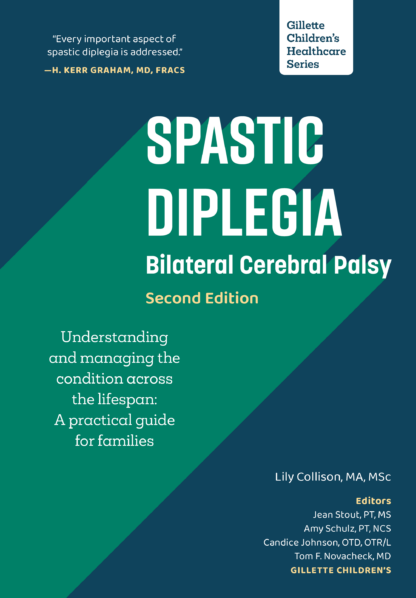
Spastic Diplegia–Bilateral Cerebral Palsy 2nd Edition
Understanding and managing the condition across the lifespan: A practical guide for families
Ways to buy
Paperback edition (complete book)
£45.00
Buy ebook edition (Amazon)
Buy ebook edition (Apple Books)
Spastic Diplegia breaks down the medical complexity of the condition into a clear, lifelong roadmap, combining world-class clinical expertise with lived experiences to empower all those involved from diagnosis to adulthood.
Whether you are an individual navigating your own care, a parent or family member supporting a loved one, or a healthcare professional looking for a broader perspective, this practical guide offers the expert-backed clarity needed to manage the condition with confidence.
The writing of Spastic Diplegia was led by Lily Collison, MA, MSc, the parent of a son with spastic diplegia.
Listen to Lily Collison discuss the background of the title on the radio here: https://www.rte.ie/radio/radio1/clips/22501320/
“Every important aspect of spastic diplegia is addressed.”
—H. KERR GRAHAM, MD, FRACS
“A wonderful and thorough book.”
—WILMA VAN DER SLOT, MD, PhD
“This book is an indispensable resource.”
—MARK D. PETERSON, PhD, MS, PARENT
“I highly recommend this book for both families and clinicians.”
—CATHY MORGAN, PhD
Key features:
- Clinical excellence: Delivers detailed medical insights and best-practice evidence-based treatment options.
- Holistic perspective: Explores how spastic diplegia impacts development, participation, and overall quality of life.
- Lifelong focus: Provides tailored guidance that evolves alongside the needs of children, adolescents, and adults.
- Empowered outcomes: Equips families with the tools and confidence to partner effectively with healthcare teams for optimal long-term health.
The Gillette Children’s Healthcare Series distills medical complexity into clear, actionable roadmaps for childhood-acquired physical and neurological conditions. By bridging the gap between clinical research and daily reality, this definitive collection provides a vital guide for those living with a lifelong condition.
Whether you are an individual navigating your own health journey, a parent or family member supporting a loved one, or a healthcare professional seeking a broader multidisciplinary perspective, this series provides the expert-backed clarity needed to manage the condition with confidence.
Co-published by Mac Keith Press and Gillette Children’s Healthcare Press, the series is built on a foundation of collaborative expertise. Every book combines evidence-based, best-practice treatments led by medical specialists with the invaluable lived experiences of individuals and families.
You can now purchase the complete Gillette Children’s Healthcare Series bundle at a 30% discount via this link.
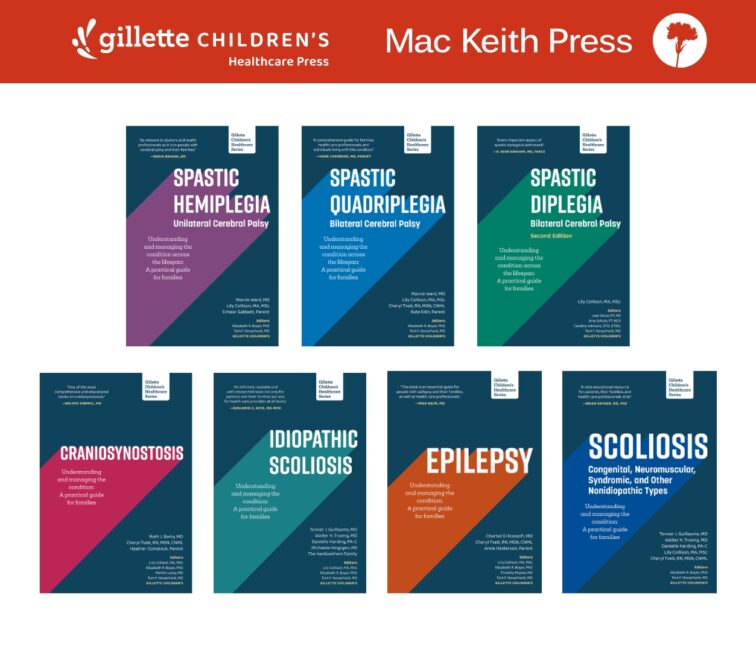
Other titles in the series include:
- Craniosynostosis
- Idiopathic Scoliosis
- Spastic Hemiplegia–Unilateral Cerebral Palsy
- Spastic Quadriplegia–Bilateral Cerebral Palsy
- Epilepsy
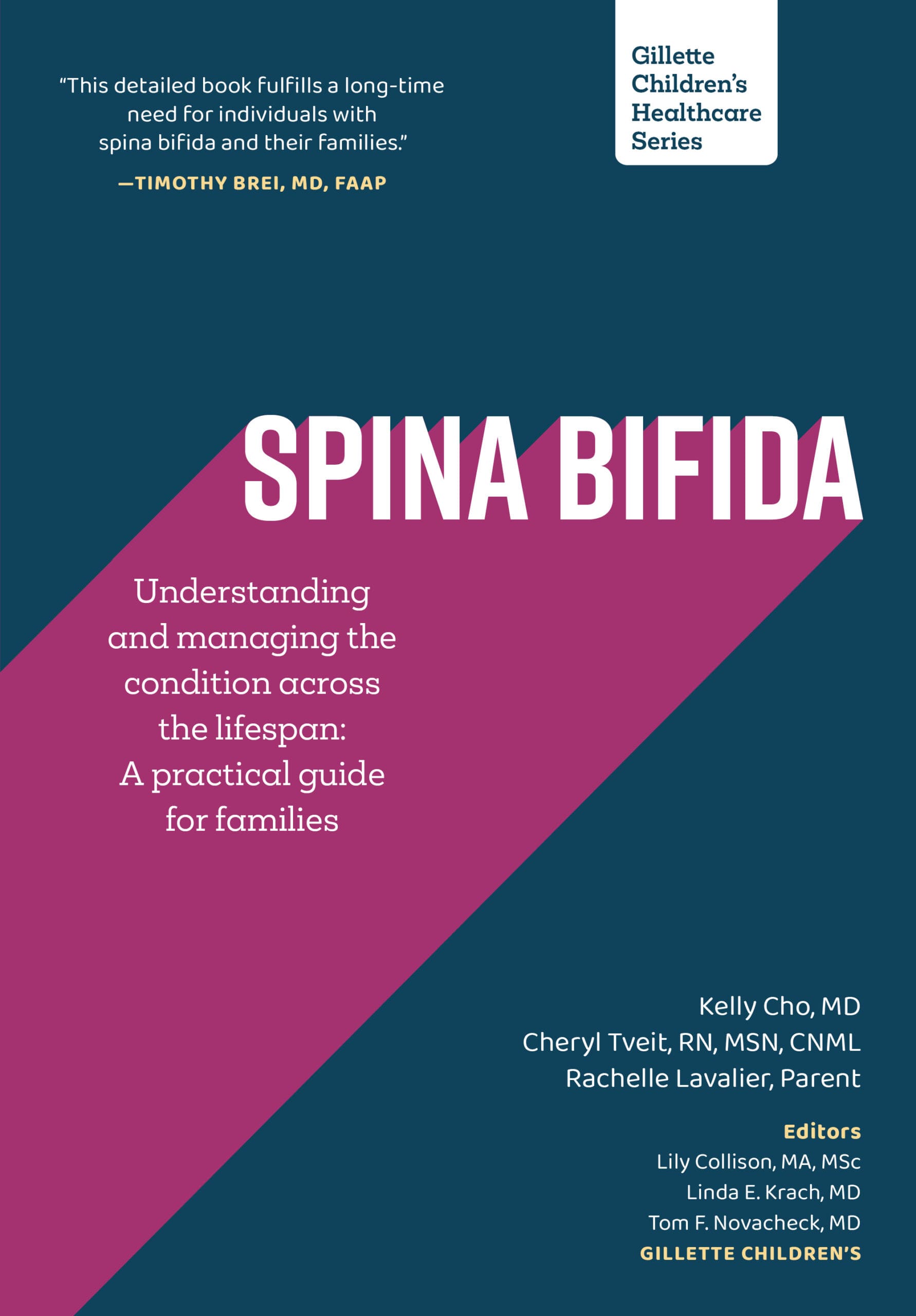
- Spina Bifida
- Osteogenesis Imperfecta
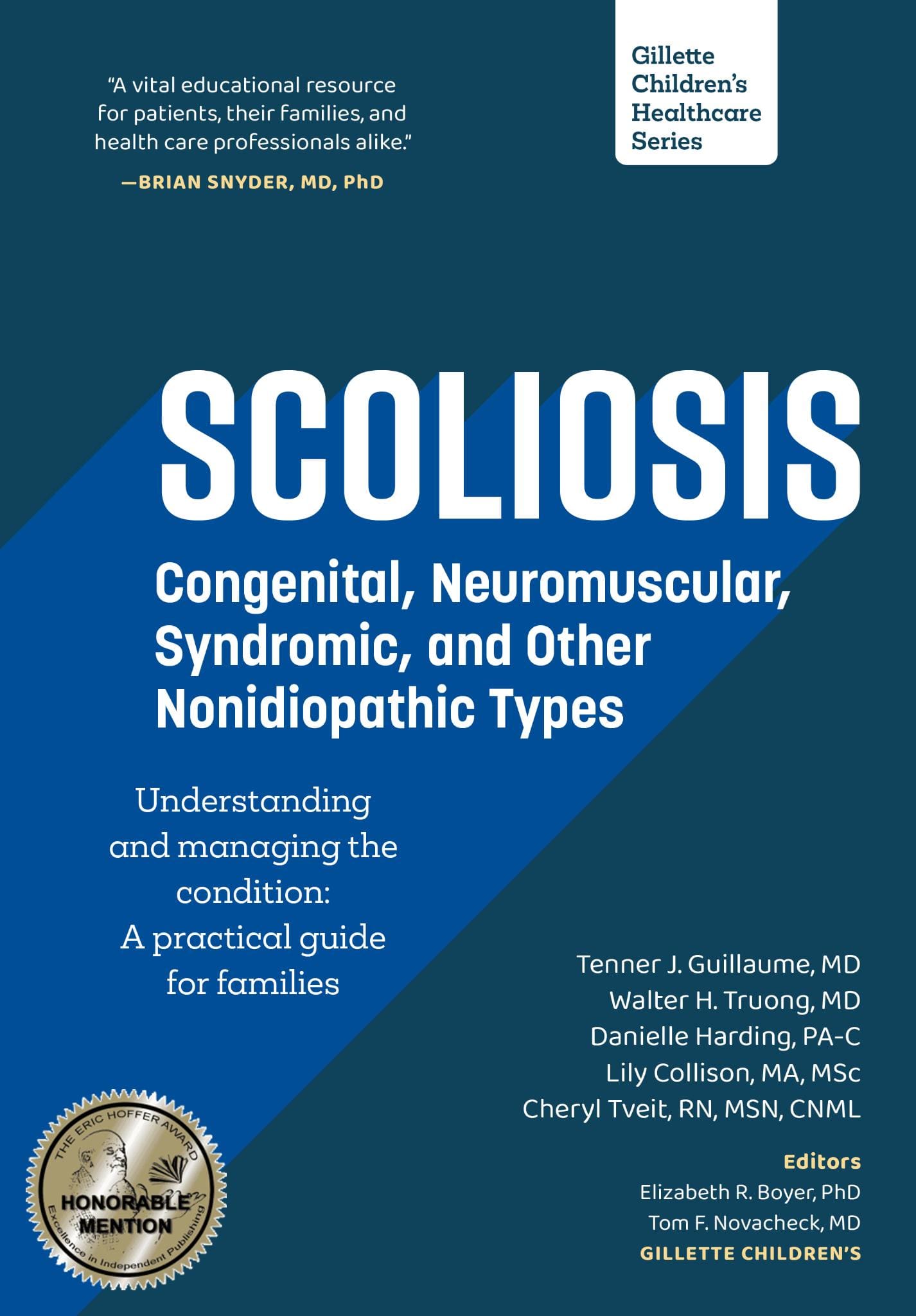
- Scoliosis: Congenital, Neuromuscular, Syndromic, and Other Causes
Author and Editors
Series Foreword
Series Introduction
- Cerebral Palsy
1.1. Introduction
1.2. The nervous system
1.3. Causes, risk factors, and prevalence
1.4. Diagnosis
1.5. Function
1.6. Classification based on predominant motor type and topography
1.7. Classification based on functional ability
1.8. The International Classification of Functioning, Disability and Health
Key points Chapter 1
- Spastic Diplegia
2.1. Introduction
2.2. The brain injury
2.3. Growth
2.4. Bones, joints, muscles, and movements
With Jean Stout
2.5. Typical walking
2.6. Primary problems
2.7. Secondary problems
2.8. Tertiary problems
2.9. Walking in individuals with spastic diplegia
2.10. Associated problems
Key points Chapter 2
- Management and Treatment of Spastic Diplegia to Age 20
3.1. Introduction
3.2. What does best practice look like?
3.3. Overall management philosophy
3.4. Therapies
With Susan Ellerbusch Toavs, Candice Johnson and Amy Schulz
3.5. The home program
With Candice Johnson and Amy Schulz
3.6. Assistive technology
With Candice Johnson, Kaitlin Lewis, Kathryn Pimentel and Amy Schulz
3.7. Tone reduction
3.8. Orthopedic surgery
With Tom Novacheck and Jean Stout
3.9. Managing associated problems
3.10. Alternative and complementary treatments
3.11. Community integration, education, independence, and transition
With Tori Bahr
Key points Chapter 3
- The Adult with Spastic Diplegia
4.1. Introduction
4.2. Aging in the typical population
4.3. Aging with spastic diplegia
4.4. Management and treatment of spastic diplegia in adulthood
With Jill Gettings
Key points Chapter 4
- Living with Spastic Diplegia
- Further reading and research
With Elizabeth Boyer
Epilogue by Tommy Collison
Acknowledgments
Appendices (online)
Appendix 1. Measurement tools
Appendix 2. Managing upper-limb problems
Appendix 3. Scoliosis management
Appendix 4. Positioning
Appendix 5. Exercise and physical activity
Appendix 6. Rehabilitation after selective dorsal rhizotomy
Appendix 7. Gait analysis
Appendix 8. Rehabilitation after single-event multilevel surgery
Appendix 9. Epilepsy management
Glossary
References
Index
The book Spastic Diplegia–Bilateral Cerebral Palsy, 2nd Edition is insightful in many ways. While reading it, I tried to put myself into both shoes: that of a parent of a child with the condition and of the individual who has cerebral palsy (CP). Even though my own personal diagnosis is primarily quadriplegia (which is slightly different from diplegia, where an individual can only occasionally walk and uses mobility aids), I could relate to many of the situations described in the book. The Gillette Children's Healthcare Series is relatively unknown in my home country (Slovenia), so it was a relief when I saw that CP was being discussed in a professional yet readable and straightforward way.
The book is well-structured and balanced in images and words. In practical terms it takes the reader by the hand and guides them through the complex world of neurological conditions, disability, and condition management. I appreciated the clear and comprehensible manner in which the nervous system and neurology functioning were explained; even people who remember little about biology would understand the basic principles of the neurological functions described. The structure of the chapters are easy to follow, as they clearly show that CP consists of multiple elements and layers. The book also effortlessly transitions to its conclusions with different types of research, with recommendations for ways in which individuals can participate and benefit from these findings.
I was fortunate that my parents introduced me very early on to what CP actually is. Therefore, I was familiar with some of the facts and aspects of the condition presented in the book, while others were new. One of the latter was the functional classification of CP according to Gross Motor Function Classification System levels and the orthopaedic procedures used in rehabilitation. When I was younger, I did not participate in any measurements or tests (e.g. my gait was never checked), apart from regular appointments with my doctors, so I was unfamiliar with the classification process or what this might mean to me.
The images, charts, and figures in the book were helpful while reading because they made the numbers and the information more relatable. The chapter about spastic diplegia in children brought me back to my own childhood when I was receiving the most attentive care and attention from my professional team and family. The physical and occupational therapy chapters are beautifully presented, giving readers a realistic description of the therapy process and what it entails, emphasizing the critical importance of such treatments. Throughout the book, the author and editors leave you enough space to learn about different approaches to treatments without imposing a strict opinion or a set of instructions. Additionally, it encourages parents and individuals with CP to choose treatments (and also alternatives) and professionals that suit them best and meet their individual needs.
Some who advocate for a social model of disability would argue that the book does not offer enough information about the social aspects and inclusion of persons with CP. CP is a specific condition that should be first understood from a medical point of view if we want to implement efficient social policies. Nevertheless, the book often emphasizes that persons with CP can lead (and it is quite encouraging that they do) an everyday life as employees, friends, partners, and active members of society, giving extra attention to our mental and behavioural health. It is also inspiring to read real-life stories of parents and adults with CP. These stories demonstrate that success is possible and that no limits should be imposed on anyone, neither by professionals nor by disabled persons themselves. As an active and independent adult who has succeeded in many fields, I can support this claim; the only limit I still see is society's narrow-mindedness and the lack of knowledge regarding ageing with CP, a topic which interests many of my colleagues and their affiliated organizations.
However, I missed getting more information on different physical therapy approaches and their impacts, such as Bobath or Proprioceptive Neuromuscular Facilitation. Learning more about the efficiency and success of CP treatment would also be useful. Finally, I would have valued some life stories of individuals with CP who had children and about the experience of parenting with CP.
On the whole, I can gladly recommend the book Spastic Diplegia–Bilateral Cerebral Palsy, 2nd Edition to anyone who would like to learn more about CP. It is an indispensable guide for parents and a comforting book for individuals leaving adolescence behind and entering adulthood, as it answers many questions and unaddressed issues. I hope to read many more similar books in the future.
Agnes Kojc, Cerebral Palsy in the European Union Association (CP-ECA), for DMCN: https://onlinelibrary.wiley.com/doi/10.1111/dmcn.16316
This book acts as a practical guide for families of those with spastic diplegia.
The book covers general definitions of cerebral palsy then dives deep into special considerations with regards to diplegia cerebral palsy. It explains detailed explanations of various medical and therapeutic expectations through age 0-20 then further information regarding expectations in adult years. The book includes patient accounts of "living with cerebral palsy" to help bring real-world experiences into the forefront. It also provides information for further reading and research opportunities for patients and families. The previous edition was published in 2020.
The book's purpose is to guide families and caretakers of those with diplegia cerebral palsy to help decode the complex medical jargon they are likely hearing in their daily lives. This type of resource is important as it helps provide families with straight-forward explanations of medical practice and potential expectations they should have for their family member's care throughout their life. Throughout the book, there are small anecdotes or sections written by contributing family members of patients with cerebral palsy, adding a grounding element of personal experience to help bring context to different sections. The book clearly meets its objectives in being a practical guide for families. It is written in easy-to-understand language with relevant details and personal accounts.
The book's primary audience is family members and caretakers of those with Cerebral Palsy, specifically spastic diplegia. It is part of a series known as the Gillette Children's Healthcare Series which covers several different topics all with the same goal of providing education to families and caretakers. The author of this book, who has a background in medical science and who, herself, was the primary caretaker of her now adult son with spastic diplegia also wrote the first book of the series. Gillette Children's Hospital now has its own publishing arm and has expanded this series across nine titles. Editors of this specific title include physical therapists, occupational therapists, and medical doctors who all provide direct care for patients with cerebral palsy.
The book meets its intended goals by providing complete medical information in addition to patient anecdotes.
The book provides a comprehensive explanation of cerebral palsy, in general, then delves into the important specific needs and expectations for those with spastic diplegia. By starting with a full chapter on the general definition of cerebral palsy and routinely used classification scales, the book presents fundamental knowledge of cerebral palsy that can then be applied throughout the continuation of the book. It goes on to define spastic diplegia and delves into the nuances of the type of brain injury, the effects on the musculoskeletal system, and other associated problems. With that groundwork, the book then describes the medical management of spastic diplegia in childhood (ages 0-20) and goes into appropriate detail regarding various treatments for spasticity, orthopedic intervention, rehabilitation therapies, commonly used assistive technology, and community integration. It then presents information about spastic diplegia in adulthood and how aging can affect patients' needs. The last sections of the book focus on patient-specific anecdotes from patients and family members which truly aligns with the stated objective of the book. It gives families realistic guidelines, experiences, and expectations from those who have lived experiences. Later sections provide future reading and research in the field to help guide families on useful resources. Of note, the book is organized in an easy-to-read manner. Language is appropriate to its audience, and it uses clear pictures, charts, and graphs throughout the text to explain concepts. The images and charts used are clear and descriptions concise.
Throughout the book there are highlighted sections pertaining to direct family anecdotes that enrich the section in which they are found. For example, at the end of a section about walking in individual with spastic diplegia, there is a highlighted section where the contributing author provides personal commentary related to her son's gait pattern and how gait analysis helped tailor their management plan. There are similar interjections throughout which again act towards the book's main objective: guiding families.
This book serves as a comprehensive guide for families of those with spastic diplegia. It does a fantastic job of digesting complex medical jargon into easy-to-read language with interspersed personal anecdotes, helping reach the intended audience in a meaningful way. It can also benefit medical professionals as it can demonstrate useful ways to present complicated information to their patients' families. I would recommend this book for all those who have family members with spastic diplegia and to medical professionals who have direct care of those patients, as well.
Cristina Brea, MD(Shirley Ryan AbilityLab) for Doody's Review Service
Related Books


Improving Quality of Life for Individuals with Cerebral Palsy through Treatment of Gait Impairment
Available as:
Ebook, Paperback